


Only three years after Oliver Heaviside died in obscurity, one of Britain’s foremost mathematical physicists was already making the case that his strange and controversial methods belonged in the history of mathematics.
The following appreciation was written by Edmund Taylor Whittaker (1873–1956), read before the Calcutta Mathematical Society on July 31, 1928, and published as “Oliver Heaviside” in the Bulletin of the Calcutta Mathematical Society, vol. 20 (1928–29), pp. 199–220. Though the original publication is now obscure, the essay was later reproduced with Heaviside’s Electromagnetic Theory and as a historical foreword to Douglas H. Moore’s Heaviside Operational Calculus.
Whittaker was unusually well qualified to assess Heaviside’s legacy. A leading mathematical physicist and historian of science, he had witnessed the transformation of nineteenth-century mathematical physics into its twentieth-century form. His essay is therefore more than biography: it is a near-contemporary assessment of Heaviside’s place in the history of mathematics.
Whittaker concentrates particularly on Heaviside’s operational calculus, including his treatment of (p=d/dt) as an algebraic operator and his use of fractional powers of operators. Methods once criticized as insufficiently rigorous were, by the 1920s, being placed on firmer mathematical foundations. Whittaker accordingly presents Heaviside not merely as an ingenious electrical engineer, but as an important mathematical innovator whose unconventional methods anticipated later developments in applied mathematics.
The essay is especially valuable because of its date. Whittaker was writing while Heaviside’s reputation was still being formed, attempting to distinguish his enduring achievements from the unconventional notation, polemics, and isolation that had helped obscure them during his lifetime. Its subsequent republication alongside Heaviside’s own work testifies to the lasting importance attached to Whittaker’s assessment.
Acknowledgement: Thanks to Bruce J. Hunt for bringing this important and often overlooked historical testament to my attention.
I have added a few illustrations and section titles to enhance the readability.
Source: Edmund Taylor Whittaker (1873–1956), “Oliver Heaviside,” Bulletin of the Calcutta Mathematical Society 20 (1928–29), 199–220; read July 31, 1928. The bibliographic details are confirmed in the Chelsea edition of Heaviside’s Electromagnetic Theory. Chelsea edition, American Mathematical Society
Oliver Heaviside
by E.T. Whittaker [Read, July 31st, 1928]
The family of Oliver Heaviside belonged originally to Stockton-on-Tees. His grandfather, Thomas Heaviside, was a builder and auctioneer in that town : and his father, also Thomas, was born there in 1813.
Childhood in Camden Town
At the age of nineteen the younger Thomas left Stockton to be apprenticed to a wood-engraver in London, where all his working life was spent. His apprenticeship over, he met and married Miss Rachel Elisabeth West, at that time a governess in the Spottiswoode family, but a native of Taunton in Somerset, the daughter of a wine-merchant there. The issue of this marriage consisted of four sons, of whom the youngest, Oliver, the subject of this notice, was born on 18th May, 1850 at 55 King Street, Camden Town.
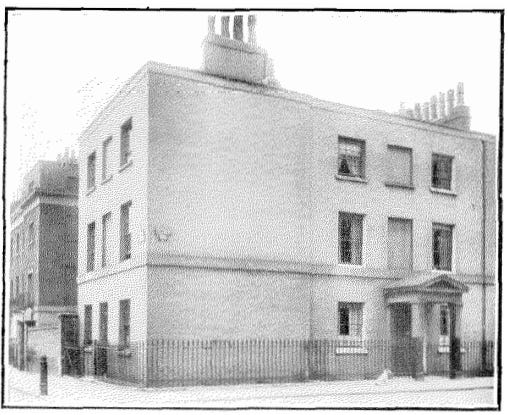
The family circumstances at the time of Oliver’s birth and childhood were very poor. Wood-engraving was not a prosperous calling, and Thomas Heaviside lacked many of the qualities that make for worldly success. The house in King Street was “a horrid place, with a beer shop opposite, a ragged school close by, low neighbours, and bad drains.” Here Oliver spent the first thirteen years of his life, “in miserable poverty :” the effect was, in his own words, “disastrous,” and “permanently deformed his future life.” But from a very young age his mind was set in one direction. “When I was a young child,” he wrote many years afterwards, “I conceived the idea of an infinite series and universe, the solar system being an atom in a larger universe on the one hand, and the mundane atom a universe to a smaller atom, and so on.”
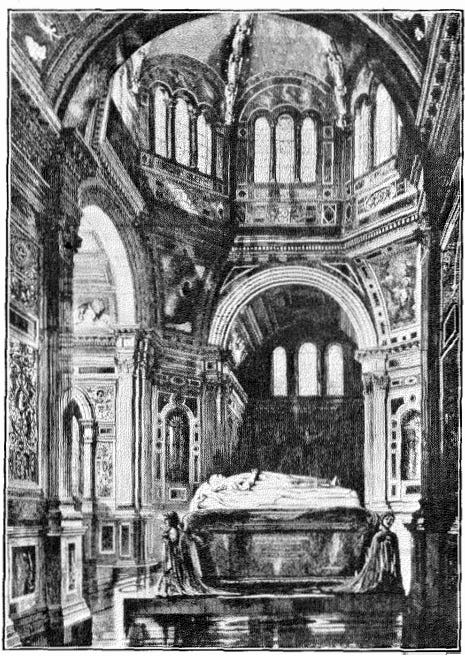
Mr. Heaviside was “in debt to the tradespeople most of the time,” and to ease his financial burden, his wife set up a school for girls, where it was proposed to begin Oliver’s education. The boy rebelled, until his father dragged him across the street to the ragged school, when he accepted the company of the other sex as the lesser evil.
The school failed in 1862, and thereafter lodgings were let. This was more successful, and in 1863 or ‘4 a better apartment-house was taken at 117 Camden Street, and the circumstances became easier. Oliver was now at a school of which he gave some reminiscences long afterwards in a discussion on the teaching of geometry, in support of his opinion that geometry is essentially an experimental science. “I feel quite certain,” he wrote, “that I am right, on this question of the teaching of geometry, having gone through it at school, where I made the closest observations on the effect of Euclid upon the rest of them. It was a sad farce, though conducted by a conscientious, hardworking teacher. Two or three followed, and were made temporarily into conceited logic-choppers, contradicting their parents : the effect upon most of the rest was disheartening and demoralizing.”
Here also “one day our respected master informed us that it had been fount out that water was not HO, as he had taught us before, but something else. It was henceforward to be H2O1.”
He cannot have got very far in mathematics and chemistry when it became necessary for him to leave school and begin some kind of work. Life at home had not been running smoothly. Thomas Heaviside, a zealous radical and free-thinker, was a man of despotic and unsympathetic temper, who kept his family in order by severe corporal punishment. Of the elder sons, one ran away from home, and one was turned out. Oliver, expecting a similar fate, was glad to hear of an opening away from London which he found by the good offices of a relative who must now be mentioned.
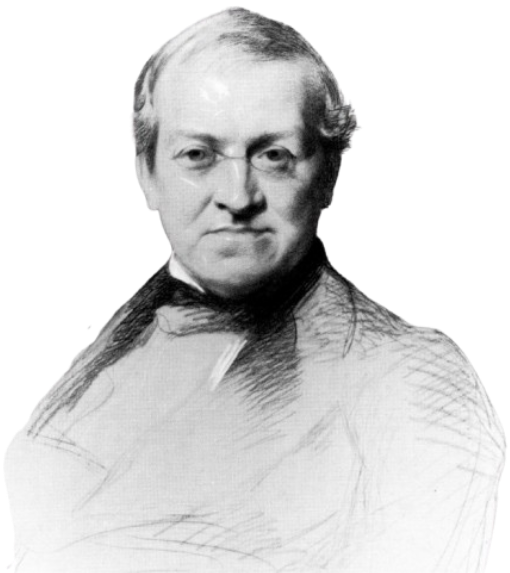

A sister of Mrs. Heaviside’s had married well, her husband being Professor Wheatstone of King’s College, London, afterwards Sir Charles Wheatstone, F.R.S. Wheatstone had made many improvements in electric telegraphy, and by his influence his nephew Oliver was appointed as a telegraphic operator at the Newcastle office of the Anglo–Danish Telegraph Company, in whose service he remained from 1868 to 1874. He was described as a young man of good appearance,” carefully dressed, with piercing eyes, a fair skin, and light chestnut hair.”
From Telegraph Operator to Mathematical Physicist
At this time telegraphy presented many problems, regarding batteries and resistances in networks of conductors, which required some ingenuity in disposing apparatus and working out the consequences by elementary mathematics. Placed in a situation where such problems originated, and stimulated by the example of his distinguished relative, Heaviside began to attack them. In 1873 he described some original methods for Duplex telegraphy, i.e., the art of telegraphing simultaneously in opposite directions on the same wire. The general principle underlying these devices was similar to that of the Wheatstone’s bridge, viz., that a battery in one arm of the bridge has no effect on a receiving instrument in the opposite arm.

Thus, if E and E’ are the batteries, R and R’ the receiving apparatus, and if the resistances are suitably adjusted the battery E produces no current in R and the battery E’ produces no current in R’, so each station only gets the other station’s signals. Heaviside then improved the invention so as to make possible quadruplex telegraphy, that is two messages in each direction : the principle was to work a Duplex system with selective apparatus at each end of two kinds, one of which responds to reversals of current, while the other is affected only by the absolute magnitude of the current irrespective of direction.
His early writings do not in general involve more mathematics than algebra, but in 1873 he made use of the Calculus, which he had studied privately in the works of Todhunter : Differential Equations he read in Boole, and Solid Geometry in Gregory and Walton. He was now a regular contributor to the Telegraphic Journal, the English Mechanic, and the Philosophical Magazine, and at the age of 24 had seven papers to his credit.
In 1874, resigning from the service of the Telegraph Co., he returned to live with his parents in London, and henceforth he followed no regular occupation : the reason is not fully known, but may have been connected with his increasing deafness.
An event of the first magnitude in the history of physics had happened just before he left Newcastle, namely, the publication of Maxwell’s Treatise on Electricity and Magnetism. Heaviside must have mastered it completely within the next two years, for in a paper published in 1876 he made use of the theory of electromagnetic momentum, which is given in Maxwell’s second volume. In 1877 another great event took place, the invention of the telephone; and almost at once he began to study the effect of telephonic transmission in causing differences between the sounds produced at the sending end and those heard in the receiver. In the early days these were very serious, telephony with an underground line was not practicable in 1881 at distances of more than about four miles. Heaviside determined to investigate the matter thoroughly in the light of what he had learnt from Maxwell’s treatise, and this was the original motive of his best-known work.
First of all, it was noticed that the telephone was remarkably susceptible to inductive effects : a man walking about a post office telegraphic battery room with a telephone and a coil of wire could read the Morse signalling from every battery in use. Heaviside therefore began by investigating the electrostatic and electromagnetic induction between two overhead parallel wires. His memoir, which shows a complete mastery of the type of analysis required in higher mathematical physics, - Fourier’s theorem and the solution of partial differential equations- is of considerable practical value at the present time, in discussing the interference in telephone circuits due to induction from electric railway currents.
Recasting Maxwell’s Electromagnetism
In 1885-87 he contributed to the Electrician a series of articles under the title “Electromagnetic Induction and its Propagation,” in the first of which Maxwell’s theory was presented in what was substantially a new form. Maxwell, following Faraday’s ideas, had clearly pointed out that the electric field at each point depended on two vectors, namely, the electric and magnetic forces at the point, and upon the electric and magnetic displacements they produced. But in Maxwell’s Treatise, the analytical consequences of these principles had not been developed in a straightforward and natural manner : his pages are cumbered with the débris of the older theories, with a maze of symbols representing electric and magnetic potentials, vector potentials, and so forth. I well remember, in 1893, buying for myself a second -hand copy of Maxwell which had been the property of a College lecturer on mathematical physics. When I came to the famous chapter on the General Equations of the Electromagnetic field, I found scribbled in his handwriting “from here on this book is absolutely unreadable.” The great service which Heaviside now rendered to science was to clear away this accumulation of rubbish, and base the theory on what he called the “duplex” equations

(where H is magnetic force, I is electric current, etc.), which modern writers generally call “Maxwell’s equations” -though they are not found in Maxwell’s Treatise, and the modern writers have in fact copied them from Heaviside.
All writers before Maxwell had regarded electric charge as a kind of substance—the “electric fluid,” or, in the two fluid theory, the “electric fluids,” vitreous and resinous electricity. Maxwell had introduced a new way of looking at the matter, in which electric displacement (present wherever there was electric force) was regarded as the fundamental quantity, and electric charge was regarded merely as the discontinuity of electric displacement at the surface of conductors. Heaviside adopted the Maxwellian (view, and expressed it more outspokenly than Maxwell. “Electrification,” he wrote, “is nothing more than the divergence of the displacement.” He referred contemptuously to “the electricity once supposed to reside upon the surface of conductors,” “the imaginary matter of free electricity, and “imaginary accumulations of the electric fluid. “In 1888 he modified this position on becoming convinced that cathode rays were streams of moving electrons. But against the tendency to postulate hypothetical substances to account for physical phenomena he strove continually, mocking at fluids, with their absurd and wholly incomprehensible behaviour, their miraculous powers of attracting and repelling one another, of combining together and of separating, and all the rest of that nonsense.” In the development of scientific theories,” he wrote, “the further we go, the less we seem to know, by the expurgation of unnecessary hypotheses.” “Truth,” he said, “is even the truest when in its most abstract form.”
His views on electricity seemed to be supported by a discovery which he made at this time. Horace Lamb, when studying electric oscillations in spherical and cylindrical conductors in 1883, had found when these conductors are placed in a rapidly-alternating field, the induced currents almost entirely confined to a superficial layer of the metal. Heaviside now in 1885 generalised this by showing that whatever be the form of the conductor, rapidly-alternating currents do not penetrate far into its substance. In fact, a perfect conductor would be impenetrable to lines of magnetic force : and if the alternations of magnetic force to which a good conductor such as copper are exposed are very rapid, the conductor has not time (so to speak) to display the imperfection of its conductivity, and the magnetic field is therefore unable to extend far below the surface. slipping of electrification over the surface of a wire,” he said, the movement of the wave through the dielectric, guided by the wire : and the true mode of establishment of a current in a wire is “the current starting on its boundary, as the result of the initial dielectric wave outside it, followed by diffusion inwards.”
His opinions regarding the nature of electric charge were no doubt the real driving force in the campaign that he waged against what he called “ the absurd 4 multiplier “connecting the density of the electric layer on a conductor and the intensity of electric force just outside it, namely,
Surface-density =(4π) ¯¹ × force × specific capacity,
“which, he said, was just as reasonable as it would be to say that, in a conductor,
Current = (4π )-¹ × E.M.F. × conductivity.
He proposed to abolish the 4π’s here, by changing the electrical units, defining a unit electric charge as that which produces at distance r an electric force 1/(4πr2): the 4π removed from the previous equation, thus reappears in this last formula. However, as he said “the few formulae where 4π should be, are principally scholastic formulae and little used : the many formulae where it is forced out are, on the contrary, useful formulae of actual practice.” “The unnatural suppression of the 4π in the formulae of central force, where it has a right to be, drives it into the blood, there to multiply itself and afterwards break out all over the body of electromagnetic theory.”
The proposal was not at first looked on with favour. “When,” wrote Fitzgerald, “people tolerate miles and furlongs and packs and bushels and barrels and firkins and hogsheads, etc., etc., how can they be expected to get up any enthusiasm over the eviction of 4π?” However, the new system of units was adopted some years afterwards by Lorentz, since when it has become the fashion.
The Battle Over Vectors
Another innovation, which led to bitter controversies, was his system of vector analysis. In 1885, he worked out the electromagnetic wave-surface when both the specific inductive capacity and the permeability are aelotropic [i.e. anisotropic]. “Owing,” he says, “to the extraordinary complexity of the investigation, when written out in Cartesian form (which I began doing, but gave up aghast) some abbreviated method of expression becomes desirable......I therefore adopt, with some simplification, the method of vectors, which seems indeed the only proper method...... The investigation is thus a Cartesian one modified by certain simple abbreviated modes of expression.” This last sentence explains the fundamental difference between Heaviside’s vector analysis and Hamilton’s quaternions.
Quaternions is not a mere abbreviated mode of expressing Cartesian analysis, but is a branch of mathematics with its own rules of operation, as distinct from ordinary algebra as geometry or mechanics. A quaternion is in fact a “number” in the generalised sense of the word in which, e.g., matrices are numbers, that is to say, we can assign a meaning to the assertion that two quaternions are equal, and we can also define the operations of adding and of multiplying two quaternions. The multiplication of quaternions however is not commutative (that is, the product qr is not in general equal to the product rq), and quaternions may be defined as that system of numbers, with non-commutative multiplication, for which the vanishing of a product of two factors necessitates the vanishing of one of the factors. The theorem that if qr = 0 then either q = 0 or r = 0 is true only in ordinary algebra (which has commutative multiplication) and in quaternions, which has noncommutative multiplication.
Now the science of Quaternions is dominated entirely by the quaternion and the scalar and vector play a very subordinate part in it, so much so, that the laws of combination of vectors are established by means of quaternions and are made to suit the necessities of quaternions. Thus, since the square of a quadrantal versor is negative (as it must be, since it represents a rotation through 180°), it is necessary that the square of every vector should be a negative scalar. Heaviside had studied quaternions in Tait’s treatise and had been repelled by this singular convention, “which,” he said, “ is quaternionically convenient. But in the practical vector analysis of physics, it is particularly inconvenient, being, indeed, an obtrusive stumbling-block. All positive scalar products have the minus sign prefixed : there is thus a want of harmony with scalar investigations and a difficulty in passing from Cartesians to vectors and conversely.” “ The inscrutable negativity of the square of a vector in quaternions,” he said elsewhere, “ is the root of the evil. “ His own system was a very simple one; it was not a new branch of mathematics, like quaternions, but merely a syncopated form of ordinary Cartesian analysis. The definitions of the scalar product, the vector product, the operator nabla, a few transformation -formulae and the integral theorems of Green and Stokes, almost complete the outfit of the vectorist. The orthodox quaternionists Tait and Knott—the “ Edinburgh School of Scorners” as Heaviside called them—rushed to the defence of their science, which was attacked not only by Heaviside but at the same time by Willard Gibbs in America. As Knott pointed out, it is impossible to satisfy the associative law if the square of a unit vector is put equal to +1: for we should then have
while
so that ((ii)j) is not equal to (i(ij)).
In 1892-93 the controversy became so violent that Lord Rayleigh was moved to quote Tertullian in a new version, “Behold how these vectorists love one another.”
Heaviside was an innovator also in names. “A really practical name,” he said, “should be short, preferably monosyllabic. If, in addition, it be the name or a part of the name of an eminent scientist, so much the better.” On these grounds he approved of the ohm and the volt, and proposed the mac (plural max) and the tom to keep them company. The ampére was not so happy, being a word of two syllables and fearing that it might in practice become amp (as indeed has actually happened) he suggested shortening it to pére : for, as he said, was not Ampére the father of electrodynamics? Perhaps the time has now come when a unit of some kind—say of impulse—should be called a heave.
How Heaviside Made the Telephone Work
We must now give some account of Heaviside’s discoveries in the theory of electric signalling - that is, of telegraphs, telephones and cables. A theory of cable signalling had been given by W. Thomson as early as 1855, in which, taking account of the electrostatic capacity of the cable and of Ohm’s law, he had obtained as the partial differential equation of electrical excitation in the cable

where R and S are constants. This is the equation characteristic of processes of diffusion, being in fact the same as the well-known equation of the linear motion of heat in a solid conductor, and the various solutions which were discovered by Fourier are perfectly adapted for answering practical questions regarding the use of the cable. Thus, if the end O of the wire is put for a very short time in communication with the battery, thereby receiving a quantity of electricity Q and is then insulated, the potential at a point x of the cable at time t is

There is no definite time of arrival for a signal, since a receiving instrument of perfect sensitiveness at any distance would (theoretically) record the signal as soon as it was sent out, while any practical receiving instrument would record its arrival only after an interval depending on the sensitiveness of the instrument. We can however show easily that, in the case of a signal such as the above the maximum effect is obtained at any given place x at a time
Thus, the retardations of signals are proportional to the squares of the distances, and not to the distances themselves.
Unfortunately, many of the electricians of the time misunderstood this statement : they seem to have pictured the current as knowing when it set out on its journey how far it had to go and adjusting its rate of propagation accordingly, like a Trades Unionist practising ca’ canny [a Scottish phrase meaning “go cautiously” or “take it easy,” i.e. holding back, proceeding at less than full effort].
If on the other hand we suppose that a signal of a different type is sent out, the potential at the sending end being made to vary regularly according to a simple periodic law, then we find that the phases are propagated regularly with a continually - diminishing amplitude : but the rate of propagation of phase is different for waves of different frequencies, and the attenuation increases rapidly with the frequency, so that an initial disturbance consisting of waves of different frequencies superposed, such as human speech, would be hopelessly distorted in transmission.
Such was the state of the theory of cables, as it was presented in Maxwell’s treatise in 1873. When as in the case of an Atlantic cable, it was only possible to get a small number of waves through per second, the influence of the self -induction of the cable was not great, and that is why Thomson’s theory, which ignores self-induction altogether, was tolerably satisfactory. The first advance in the general theory was made when Heaviside in 1876 took account of self-induction, thus obtaining for the potential, in place of Thomson’s equation, the partial differential equation

which is now known as the equation of telegraphy, and might, I think, properly be called Heaviside’s equation. When the term is negligible, this equation becomes


which is the equation of propagation of waves such as those of sound or light, parallel to the axis of a with the constant velocity 1/✓LS for disturbances of all periods, and with no attenuation, so that all signals are transmitted without any distortion whatever. This is evidently the ideal to aim at, and as Heaviside was the first to understand, it is to be sought by diminishing the co-efficient R/La; that is to say, by increasing the self -induction of the wire, we tend to make the retardations of phase equal for waves of different frequencies, and we also tend to make the alternations equal for waves of different frequencies, and therefore inductance is a way of improving things, of making the propagation of waves along wires similar to the propagation of waves in free aether.
Applying these ideas to the case when the waves correspond to the constituents of the human voice, Heaviside now saw clearly that the way to attain telephonic speech through a long wire was to increase self-induction. Self-induction is, in fact, the same kind of benefit to the wave that inertia is to a body moving along against a viscous resistance.
Heaviside showed moreover that leakage of the current from the wire is not altogether undesirable : although it weakens the signals, it tends towards equalising the effects on waves of different frequencies, and so helps to prevent distortion.
To put the matter somewhat differently, we want to secure that the magnetic and electric energies shall be equal, as they must be for distortionless transmission; in the cables, the electric energy tends to excess : and the remedy is to increase the magnetic energy by increasing the self-induction, and also to diminish the electric energy by leakage.
Unfortunately, the officials of the British Post Office failed to see the merit of Heaviside’s work. Mr. W. H. Preece, who was Electrician to the Post Office from 1877 to 1899, regarded self-induction as something harmful to telephony, and tried to avoid it as much as possible. Heaviside called attention publicly to the blunders of the Post Office, who for telephony had put down conductors having a resistance of 45 ohms per mile, combined with large permittance and small inductance : and then to make the violation of electro-magnetic principles more complete, put the intermediate apparatus in sequence, so as to introduce as much additional impedance as possible” [Electrician , 7th October , 1887]. Preece, however, seems to have been unmoved : and when Heaviside wrote a paper in conjunction with his brother Arthur, who was a subordinate of Preece in the Post Office Engineers, they were given to understand that “the official censor” ordered all Oliver’s part to be left out [Electrical Papers II , p . 324]. Heaviside referred [Electrician , 19th October, 1888] to “a certain peculiar concurrence and concatenation of circumstances, rendering it impossible for me to communicate the practical applications of my theory, either via the Society of Telegraphic Engineers and Electricians, or four other channels, the resultant effect of which was to screen Mr. Preece from criticism.” The editor of the Electrician “returned a short article on long distance telephony, which pointed out official errors in detail, and directed attention to the contrary results indicated by my theory, this paper having been in official hands. Perhaps it was thought that official views were so much more likely to be right that it was safe to decline the discussion of novel views in such striking opposition thereto. There seemed also to be an idea that official views, in virtue of their official nature, should not be controverted or criticised.”
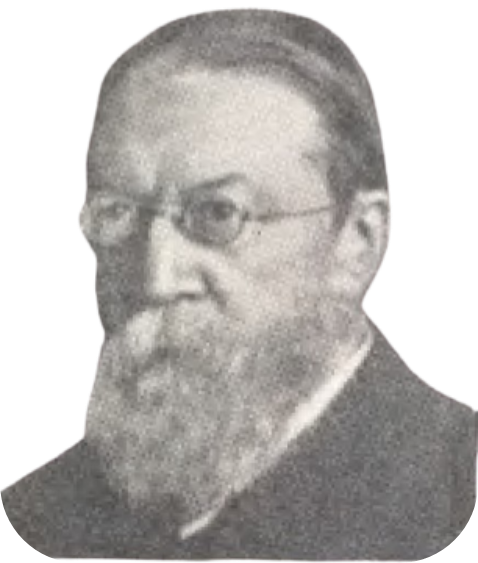
Preece was a high Government official, while Heaviside was a person without degrees or distinctions or position, living in a Camden-Town lodging-house. Later in life Preece prospered still more : he became a K. C. B., an officer of the Legion d’honneur, he had one house in Queen Anne’s Gate and another at Wimbledon, while Heaviside was living in squalor in a country village. But if, as seems likely, Preece is known to posterity only by what is said about him in the works of Heaviside, time will have brought an ample revenge.
Heaviside’s ideas on improving telephonic transmission by increasing the self -induction in the circuit were put into practice towards the end of the century in America by Pupin, who by inserting inductive coils at intervals along the line made telephony possible across the American continent. Later, continuous loading of the cable was introduced, precisely as Heaviside had suggested.
Recognition at Last
For the present, however, the outlook was dark. In November, 1887, he was “requested to discontinue” the series of papers in the Electrician. “A change of editor had occurred, and the new editor asked me to discontinue. He politely informed me that although he had made particular enquiries amongst students who would be likely to read my papers, to find if anyone did so, he had been unable to discover a single one.”
However, the Philosophical Magazine was still open, and next year the Electrician relented, and published [Electrician , 23rd Nov. , 1888] an investigation of the electromagnetic effect of a moving charge. This marks a new stage in the development of Heaviside’s fundamental notions, since now (convinced, doubtless, by the evidence that cathode rays are torrents of negatively-charged particles) he abandoned the ultra-Maxwellian notion that “electricity is merely a discontinuity in electric displacement and admitted it [As Maxwell himself had done , Treatise §§ 768-770 and, before him , Faraday , Exper. Res ., § 1644] as a quasi-substance capable of motion. A moving charge, he now asserts, “is equivalent to an electric current-element,” the necessity for this may be seen on pure Maxwellian principles by simply considering that when a charge q is conveyed into any region, an equal displacement simultaneously leaves it through its boundary.” So “the true current has three components, thus :

where H is the magnetic force, C the conduction- current, D the displacement, and ρ the volume-density of electrification moving with velocity u.” He then proceeded [Electrician , 7th December, 1888] to calculate the field due to a charge q moving at speed u along the axis of z. Everything is symmetrical with respect to this axis; the lines of electric force are radial outwards from the charge, those of magnetic force are circles about the axis. Having thus settled the directions, it remains only to specify the intensities at any point P distant from the charge, the liner making an angle with the axis. Denote by E the intensity of the electric, and by H of the magnetic force. Then if c is the permittivity and u the inductivity, so that μcv2 = 1 where v is the velocity of light, we have

In a paper within a few months afterwards [Phil. Mag., April, 1889, p. 324], he gave for the first time the all-important result that an electric point -charge e moving with velocity v in a magnetic field is acted on by a mechanical force equal to e multiplied by the vector -product of v and the magnetic induction. This may be regarded as the first appearance of the electron in electromagnetic theory. The scientific papers which Heaviside had been publishing now for sixteen years had so far brought him little but neglect and ill-treatment from those in influential positions. But the tide of interest in the development of Maxwell’s theory was slowly rising. The experimental work of Hughes in 1886 verified the theory of surface conduction along wires, which Heaviside had advanced a year previously, and this was followed in 1887-88 by the experimental work of Hertz and Lodge on electrical vibrations and electromagnetic waves, broadly confirming the truth of the theory regarding the propagation of disturbances along wires which Heaviside had worked out on the basis of Maxwell’s doctrine. In January, 1889, Sir William Thomson, who was then President of the Institution of Electrical Engineers, delivered an address on “Ether, Electricity, and Ponderable Matter,” [Thomson’s Math. and Phys. Papers 3, p. 484] in which Heaviside’s work was spoken of most highly, and at the same time Lodge wrote enquiring if he would allow his name to be put forward as a candidate for the Royal Society. Heaviside at first raised objections to this, but Lodge overcame them, and in June, 1891, he was elected a Fellow. Just about this time [I have not been able to determine the precise date, but he was certainly living in St. Augustine’s Road, Camden Town, in February, 1889, and at Paignton in June, 1892] another change took place in his outward circumstances. The household at Camden Town, consisting of his father and mother and himself, resolved to leave London and settle at Paignton, on the coast of South Devon, where his brother Charles was engaged in the musical instrument business. Oliver never moved more than a few miles from Paignton during the rest of his life.
In 1891, the publishers of the Electrician proposed that a series of articles on “Electromagnetic Theory” just begun in that journal, should be brought out later in book-form. This raised the question of his earlier papers, the offprints of which were now exhausted. Eventually it was arranged to reprint the whole of his work up to the end of 1890, together with a Royal Society memoir of 1891 “on the forces, stresses, and fluxes of energy in the electromagnetic field” in two volumes, which appeared in 1892 under the title Electrical Papers. The sale was not very great. “They printed 750 copies,” he told Bjerknes, “and had 359 copies left five years after. They disposed of these at reduced prices, 10s., 2s./6d., and then all the unbound remainder at 1s./6d., and so wiped it all out.” “They can be picked up cheap,” he wrote in 1901, “because the remainder was sold off in quires for a few pence per volume, on account of the deficiency in storage room. So, look in the fourpenny boxes.”
However little his own books might be read, he never ceased to study the writings of others. Forsyth’s Theory of Functions and Whitehead’s Universal Algebra were both published when he was in later middle life, and could scarcely be described as works on physics; but the copies which were found on his shelves after his death were full of his pencil annotations.
The year 1892 saw the beginning of a friendship with G. F. C. Searle of Cambridge, which was the chief support of his later days; and saw also the extension of a scientific correspondence which he carried on for many years with Fitzgerald, Lodge, Perry, Silvanus Thompson, Ayrton, and others. It is remarkable that (except for Searle) he had little to do with Cambridge : not that he was lacking in admiration for the University of Maxwell and Kelvin and Rayleigh and J. J. Thomson : “Good mathematicians,” he said playfully, “when they die, go to Cambridge” : but Cambridge was rather self-contained, and before 1890 his work had been scarcely known there; and when his merit was at last recognised, a most unfortunate dispute broke out between him and the Cambridge pure mathematicians, which alienated him from Cambridge for the rest of his life.
The Operational Calculus
The subject of the dispute was what is now called the Operational Calculus. For many years Heaviside had been accustomed to use symbolic differential operators in his electromagnetic researches; having doubtless originally learnt them from the elementary works on Differential Equations, where, e.g., the solution of such an equation as

may be obtained by writing D for the operation of differentiating with respect to t, and then proceeding thus :
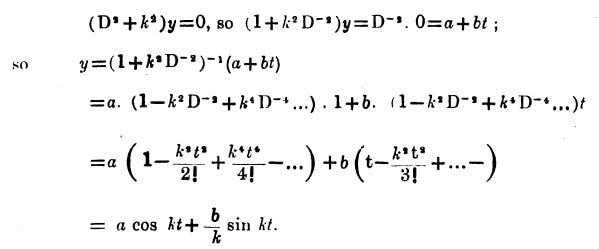
Heaviside applied this method to establish a general “expansion theorem” as he called it [Phil. Mag., December, 1887, p. 479 ; Electrician, August 9, 1895] which may be stated thus :
Let a linear differential equation with constant coefficients be written

where t is the independent variable, i the dependent variable, E a given function of t, and where ZZ (d dt is an operator involving differentiations with respect to t. In the applications, i generally denotes the current at some point of an electrical system containing resistances, inductances, condensers, etc., and E denotes an impressed electromotive force applied at some other point of the system. Then if i and E are zero previous to the instant t = 0, and if at this instant E is suddenly increased to a finite value and maintained steadily at that value, the current i at time t is given by the equation

where p1, p2, ... pn. are the roots of the equation Z(p) = 0. This formula, as he said, “goes straight to the final simplified result.”
These operational researches led him on naturally to fractional differentiation, i.e., assigning a meaning to dry when u is not a positive integer. “There de is a universe of mathematics,” he said, “lying in between the complete differentiations and integrations.” This is an old subject : Leibniz considered it in 1695 [Letter to the Marquis de l’Hôpital, September 30, 1695, and letter to John Bernoulli, December, 1695] and Euler in 1729 [Letter to Goldbach, October 13, 1729, printed in Fuss, Corresp. Math. I, p. 3] : and indeed it was in order to generalise the equation

to fractional values of n that Euler invented the Gamma -Function, by the aid of which he arrived at the generalisation

where n may be fractional. Since then, there has been an almost continuous succession of papers about fractional derivatives [I have a list of 115 papers which I have noted]. Heaviside seems to have known nothing of them beyond a reference of a few lines in Thomson and Tait’s Natural Philosophy [Vol. I, p. 197] : but he carried the subject on original lines further, in some directions, than any of his predecessors. As an example of his method, consider the following problem :
A body with a plane face is initially at zero temperature; its face is thereafter maintained at constant temperature Vo ; to find the resulting temperature gradient at the face.
Let V denote the temperature at distance x from the plane face at time t. Then the partial differential equation of conduction of heat in the body is

where h is constant. Write p for:
so,
and therefore

Thus the surface gradient =

and since Euler’s formula above gives

we have

As a second example of Heaviside’s methods, let us take another problem relating to the conduction of heat in an infinite solid with a plane face : let us consider the solution of the equation

Subject to the initial condition V = 0 when t = 0 and to the boundary condition

where V0 and h are constants, Let it be required to find the value of V when x = 0, and let us denote this function by V₁.
We extract a kind of operational square root of equation (1), converting it into

whereby we are enabled to transform the boundary condition into the form

So

whence

This asymptotic expansion is useful when it is large. When tis small on the other hand, we have from (2)

which on expanding gives

The solutions (3) and (4) are as a matter of fact perfectly correct.1

“Shall I Refuse My Dinner Because I Do Not Fully Understand the Process of Digestion?”
One can imagine the feelings of the professional pure mathematicians as they read this kind of thing. At that time the most influential of them were trying to raise the standard of “rigour”—to move away from the happy old easy-going Todhunter period to the style which the Germans had adopted under the influence of Weierstrass : and the “operation” of extracting the square root of the process of partial differentiation seemed worse than anything in Todhunter —a kind of mathematical blasphemy. Not long afterwards one of them told me what happened. “There was a sort of tradition,” he said, “that a Fellow of the Royal Society could print almost anything he liked in the ‘Proceedings’ without being troubled by referees : but when Heaviside had published two papers on his symbolic methods, we felt that the line had to be drawn somewhere, so we put a stop to it.” Refused publication in the Proc. R. S., he continued in the Electrician : but the wound was sore, and the alienation from the Cambridge mathematicians lasted all this life.
“Even men who are not Cambridge mathematicians deserve justice, which I very much fear they do not always get” [Electrician , Dec. 14, 1892].
He did not fail, however, to defend his views in public.
“Mathematics is an experimental science,” he said,” and definitions do not come first, but later on.”
“The Euclidean logical way of development is out of the question. That would mean to stand still. First get on, in any way possible, and let the logic be left for later work.”
“It is not so long ago since mathematicians of the highest repute could not see the validity of investigations based upon the use of the algebraic imaginary. The results reached were, according to them, to be regarded as suggestive merely, and required proof by methods not involving the imaginary.”
“The use of operators frequently effects great simplifications, and the avoidance of complicated evaluations of definite integrals. But then the rigorous logic of the matter is not plain! Well, what of that? Shall I refuse my dinner because I do not fully understand the process of digestion?”
“There is an idea widely prevalent that in mathematics, unless you follow regular paths, you do not prove anything : and that you are bound to understand fully and prove rigorously everything as you go along. This is a most pernicious doctrine, when applied to imperfectly explored regions. Does anybody fully understand anything?”
“Three of the pernicious results of overmuch rigour may be mentioned here. First, its enfeebling action on the mind. Secondly, it leads to the omission from mathematical works of the most interesting parts of the subject, because the authors cannot furnish rigorous proofs. Thirdly, it leads to an inability to recognise the good that may be in other men’s work, should it be unconventional, and be devoid of rigorous pretence.”
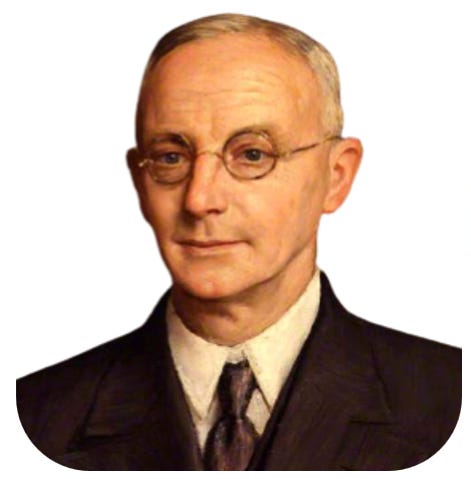

Looking back on the controversy after thirty years, we should now place the Operational Calculus with Poincaré’s discovery of automorphic functions and Ricci’s discovery of the Tensor Calculus as the three most important mathematical advances of the last quarter of the nineteenth century.
Applications, extensions and justifications of it constitute a considerable part of the mathematical activity of to-day [I am thinking of the recent work of H. Jeffreys, Norbert Wiener, Bromwich, Parson, Murnaghan, March and others].
Besides his troubles with the “scienticulists” and “mathematicians of the Cambridge or conservatory kind, who look the gift-horse in the mouth and shake their heads,” as he described them, Heaviside had the constant trouble of poverty. In February, 1894, three of his friends [Fitzgerald, Lodge and Perry] wrote him a joint letter, asking his consent to a proposal to obtain for him a grant from the Royal Society’s Scientific Relief Fund. But he looked on this as “charity,” and refused to allow the matter to go forward. However, in the spring of 1896 the same friends, with the support of Lords Rayleigh and Kelvin, induced Mr. Balfour to recommend him for a Civil List Pension of £ 120 a year, and this he accepted [About twelve years afterwards it was increased].
During these years he had been living at Paignton with his parents : but his mother died in 1894 and his father in 1896, and he was left alone. Early in 1897, he removed to “Bradley View,” Newton Abbot—a small town, seven miles from Paignton, where he lived until 1908, at first with a housekeeper, and then by himself. He never attended scientific gatherings, but sometimes another mathematical physicist would journey to Devonshire to see him: a visit of this kind from Fitzgerald in September, 1898 gave him great pleasure. For exercise he cycled; and in July, 1900 had a slight accident caused by running over a hen. His papers in the Electrician from 1891 to 1898 were now collected under the title Electromagnetic Theory in two volumes, of which the first was published in 1893 and the second in 1899; and further honours came to him he was elected an Honorary Member of the Manchester Literary and Philosophical Society in 1894, and a Foreign Honorary Member of the American Academy of Arts and Sciences in 1899.
The Heaviside Layer and the Later Work
In the latter year an enquiry of Fitzgerald’s turned his attention to a new problem. “Have you,” wrote Fitzgerald, “worked out the propagation of waves round a sphere? — a case of this is troubling speculators as to the possibility of telegraphing by electromagnetic free waves to America. It is evidently a question of diffraction, and I think must be soluble.”
Heaviside’s work on the guidance of electromagnetic waves by conducting wires suggested a physical solution. “A wire,” he said in 1902, “seems to guide a disturbance round a corner, by holding on to the tubes of displacement by their ends...... There is something similar in ‘wireless’ telegraphy. Sea water has quite enough conductivity to make it behave as a conductor for Hertzian waves, and the same is true in a more imperfect manner of the earth. There is another consideration. There may possibly be a sufficiently conducting layer in the upper air. If so, the waves will, so to speak, catch on to it more or less. Then the guidance will be by the sea on one side and the upper layer on the other.” The permanently ionised layer in the upper air here introduced was afterwards called by Eccles the “Heaviside layer,” and under that name is familiar to all students of “wireless.” [Sir J. Larmor has given reasons for believing that it is the free oscillation of the ions in the layer, undisturbed by collisions , which bends the waves].
Geophysics and Meteorology were indeed among the chief interests of the latter part of his life. “I am very familiar,” he wrote in 1921, “with the surface of discontinuity separating streams of air, which is, it seems to me, not a surface really, but may have considerable depth, and have made some excellent predictions here. Said I to a bobby who came one evening with a summons, “Look at that sky !” “Oh! beautiful,” he answered. “Do you know what it means? There’s going to be very rough weather. It may not come till to-morrow, or it may come in the night.” “Bobby did not seem to care. It came in the night, and did hundreds of pounds’ worth of damage on the little bathing beach near the station.”
Much of his work after 1900 was concerned with the radiation from electrons describing circular and other orbits, the general theory of an electric charge in variable motion, the generation of pulses, and the theories of other electrical writers, e.g., Helmholtz, Lorentz, and Larmor, In reviewing these he expressed a strong dislike to the Principle of Least Action, “which,” he said, “in spite of its name, has the remarkable property of increasing the amount of work to be done.” In 1902, he wrote the article “Telegraphy, Theory,” for the “New Volumes” of the Encyclopaedia Britannica; and in 1912 nearly all the papers which he had published since 1899 were collected in a third and final volume of Electromagnetic Theory. The three volumes were reprinted in 1922, showing that at last - at seventy-two - he had a reading public : and they were reprinted again in 1925.
In the latter part of his life more honours were offered. The Council of the Royal Society resolved to award him the Hughes Medal in 1904 : but he declined it privately and the announcement was not made public, another recipient being chosen. In 1905 the University of Göttingen, where Weber and Gauss had worked, conferred on him the degree of Ph.D. honoris causa, The Institution of Electrical Engineers made him an Honorary Member in 1908, and the American Institute of Electrical Engineers in 1918. He was the first recipient of the Faraday Medal of the Institution of Electrical Engineers in 1923, the President of the Institution personally journeying to Devonshire to present it.
The years 1919-1920 saw an extraordinary display of popular interest in the theory of General Relativity, which had been discovered [That is to say, the field-equations had been given] by Einstein and Hilbert in 1915, and vindicated triumphantly by the eclipse observations of May, 1919. Heaviside disliked it. “The Einstein enthusiasts,” he wrote in March, 1920, “are very patronizing about the ‘classical’ electromagnetics and its ether, which they have abolished. But they will come back to it by and by. Though it leaves gravity out in the cold, as I remarked about 1901 (I think), gravity may be brought in by changes in the circuital laws, of practically no significance save in some very minute effects of doubtful interpretation (so far). But you must work fairly, with the Ether, and Forces, and Momentum, etc. They are the realities, without Einstein’s distorted nothingness.”
The Last Years
In 1908, he had removed from Newton Abbot to “Homefield,” Lower Warberry Road, Torquay, where the rest of his life was spent : at first a relative, a Miss Way, kept house for him, but for the last eight years the old man lived quite alone, deaf, eccentric, a butt for the boys of the neighbourhood, and often in arrears with his rates. “As regards myself,” he wrote to Bjerknes at the beginning of 1921, “I was very ill indeed after writing to you, and had great financial trouble as well, and had to borrow many hundreds of pounds to pay the bank and others, to avoid being sold up, and left homeless. I got long credit from the Gas Co., but they tired of that, and began their “cutting off the gas threats again. A legacy of £155 came in just in time to help, and I paid up on September 30th. Now they are at me again. “From August, 1921 to October, 1922 the gas was cut off entirely from his house. A distinguished physicist who went to see him in the Christmas Vacation of 1921-22, on arriving at Torquay, wrote that he would call next day : but on calling found the door closed and a note outside to say that Heaviside was not disposed to see visitors, having gone to bed to keep himself warm. The front door was covered with papers which he had stuck up an invitation from the President of the Royal Society to a Conversazione, an advertisement of “Twink,” notices from the Gas Company about debts and cutting off gas, a judgment against him in the County Court, Poor Rate notices, etc. “I have had a dreadful bad winter,” he wrote in June, 1922, “in bed nearly all the time, no gas, cold house, cold food, lumbago of course, but the worst was rheumatic gout. Could not wear boots at all. Could not get proper bed socks to walk about in, Buried under all the blankets I have. Now and then I scribbled a sort of diary about my persecution by the Poor and the Gas and others. “Even in these painful circumstances, however, his scientific correspondence was enlivened by references to passing events with frequent quotations or impromptu verses. The United States claim for repayment of the English debt in 1923 led to some scathing remarks on American greed and greed in general, ending with
“Eat slowly. Only men in rags, or gluttons deep in sin
Mistake themselves for carpet bags, and shove the vittles in.”
* * *
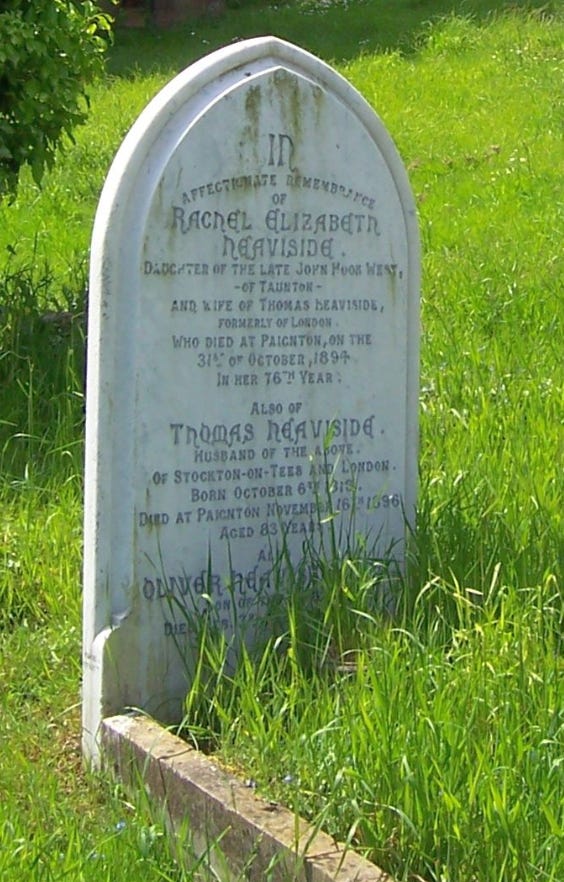
At the last his friends took him into a nursing home, where he died on February 3rd, 1925, at the age of 75. He lies buried in the grave of his father and mother in Paignton Cemetery.

Download the Conference Flyer, Here!
That’s all for now. Remember always to keep calm, and make physics great again.
And join us at the Heaviside Symposium.
More soon,
Hans
Ok, someone please 'splain to me why dt^2/d^2 of 0 is a+bt?