


“History is a set of lies agreed upon”
Napoleon Bonaparte (1769–1821)
To Emmanuel, Comte de Las Cases, 1816
Ironically, Napoleon probably never said “History is a set of lies agreed upon,” at least not exactly [[i]]. By jointly accepting the idea that history is merely a consensus of falsehoods and attributing that to Napoleon, we create a shared narrative that shapes our perception of the past.
The most robust such narratives are those grounded in demonstrable truth. However, even the best constructed and most faithful narratives inevitably employ a certain amount of cherry picking, selecting the touchstones of truth while rejecting irrelevant or contradictory facts. We craft our narratives to serve our purposes and color our understanding to align with our prejudices.
The earlier conventional wisdom with which we now disagree? Old dogmas overthrown by our newly discovered truths.
The stale authority of a tradition we reject? Replaced by the rigor of review by peers who just so happen to agree with us.
Private patrons who demand allegiance to their self-serving agendas we oppose? Supplanted by funding from impartial government experts who enforce an orthodoxy that suits their own purposes, and perhaps ours as well.
Those who question that orthodoxy? They are kooks, cranks, and crackpots who we may safely and summarily dismiss without a hearing.
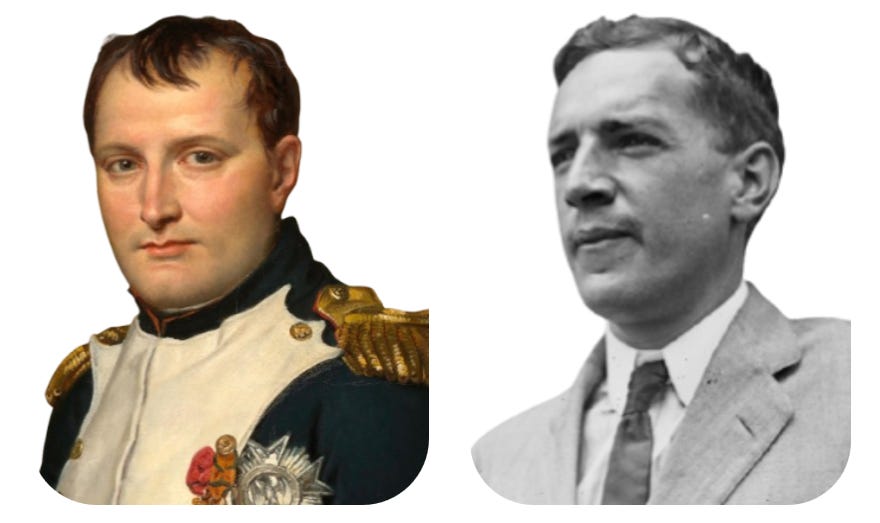
One of the most fundamental truths is that people casually accept and advocate errors when those misrepresentations serve their purposes or are to their benefit. As journalist, novelist, political activist, and candidate Upton Sinclair (1878–1968) said, “It is difficult to get a man to understand something when his salary depends upon his not understanding it” [[iv]].
Physics, like history, is a narrative. To understand the narrative, you must ask who wrote it and why. To paraphrase Napoleon, physics is a set of interpretations collectively accepted. More generally, we have to understand: what are the assumptions underlying science? We call these an “epistemic framework.”
An epistemic framework is the structured set of assumptions, the stories, principles, practices, and conceptual tools through which knowledge is generated, evaluated, and interpreted. An epistemic framework encompasses not only the formal rules and methods of inquiry but also the background beliefs, narratives, and norms that guide what counts as legitimate evidence, how questions are posed, and how conclusions are justified. In short, it is the organizing architecture of understanding within which knowledge claims are made and assessed.
In Fields & Energy Book II: Where Physics Went Wrong, we begin with a look back at the narrative of Book I: Fundamentals & Origins of Electromagnetism, starting with a recap of science history.
That’s all for now. Remember always to keep calm, and make physics great again.
See you next week,
Hans
P.S. Pick up your copy of Fields & Energy Book I: Fundamentals and Origins of Electromagnetism, if you haven’t already:
Next time: II 1.1 Far-Eastern Scientific Precursors
Enjoyed the article, but maybe not quite enough to spring for a paid subscription?
Then click on the button below to buy me a coffee. Thanks!

Full Table of Contents [click here]
Follow Online:
You may follow me online in other places as well:
Telegram: 𝔸𝕖𝕥𝕙𝕖𝕣𝕔𝕫𝕒𝕣’𝕤 𝔸𝕖𝕥𝕙𝕖𝕣𝕤𝕥𝕣𝕖𝕒𝕞
Gab: @aetherczar
Twitter: @aetherczar
Amazon: Hans G. Schantz
References
[[i]] de Las Cases, Emmanuel-Auguste-Dieudonné, comte (1766–1842), Le Mémorial de Sainte-Hélène, Paris, Paris, Dépôt du Mémorial [etc.], 1823, pp. 411-412. “Mais qu’est alors cette vérité historique, la pluplart du temps? Une fable convenue, ainsi qu’on l’a dit fort ingénieusement.” “But what is this historical truth, most of the time? A conventional fable, as has been very ingeniously said.” See: https://archive.org/details/mmorialdesainte17casegoog/page/n418/mode/2up
[[ii]] Jacques-Louis David - The Emperor Napoleon in His Study at the Tuileries - Google Art Project, 1812. Jacques-Louis David - zQEbF0AA9NhCXQ at Google Cultural Institute. See: https://en.wikipedia.org/wiki/File:Jacques-Louis_David_-_The_Emperor_Napoleon_in_His_Study_at_the_Tuileries_-_Google_Art_Project.jpg

[[iii]] Upton Sinclair (1878–1968), Abstract/medium: 1 negative : glass ; 5 x 7 in. or smaller. Bain News Service, publisher. ~1900.
Library of Congress Catalog: https://lccn.loc.gov/2014686178
Image download: https://cdn.loc.gov/service/pnp/ggbain/06100/06185v.jpg
Original url: https://www.loc.gov/pictures/item/2014686178/
No known restrictions on publication. For more information, see George Grantham Bain Collection - Rights and Restrictions Information https://www.loc.gov/rr/print/res/274_bain.html
See: https://commons.wikimedia.org/wiki/File:Upton_Sinclair_LCCN2014686178_Crop.jpg


[[iv]] Upton Sinclair (1878–1968), I, Candidate for Governor: And How I Got Licked, Berkeley, California, University of California Press, 1994, p. 109. Originally published 1934-1935.
“Orthodoxy means not thinking--not needing to think. Orthodoxy is unconsciousness.”
- George Orwell
One of the glaringly questionable axioms is the actual reality of infinity or the infinite. All differential and integral calculus depends upon the idea.
I have joined a club I only lately knew existed - the ultrafinitists
Calculus has done us proud up until now, but supercomputers are now able to show that finite mathematics is just as useful, if not more, than its predecessor.