


The Roman Empire rose from the ashes of the Roman Republic and the tumult of the Roman Civil War with supreme authority vested in Emperor Augustus (63 BC–AD 14). The Roman Empire was a Monarchy with absolute power in the Emperor’s hands and only a semblance of the Republic’s structure. In practice, Polybius’s balance of power remained, at least after a fashion.
“The emperor himself was precariously situated between the forces which he nominally commanded…. Domestic and political murder were the imperial tutors, instructing the emperor exactly where his power had its limits” [[i]].
Furthermore, the Empire retained and upheld the ancient Roman respect for the law. “An empire can exist only if it offers to the world some negotiable benefit in exchange for tribute. Roman law was Rome’s export commodity” [[ii]].
In AD 62, Jewish leaders in Jerusalem accused a tentmaker and itinerant street preacher of false teaching and of defiling their temple. Roman authorities arrested the homeless man, and prepared to scourge and question him. He asked, “Is it lawful for you to scourge a man that is a Roman, and uncondemned?” Confirming he was a Roman, the authorities transferred the preacher from Jerusalem to Caesaria to prevent his lynching at the hands of his Jewish accusers. He was held for two years when a new governor arrived. The Jews renewed their request for him to be transferred to their custody for judgement (and execution).
“I appeal unto Caesar,” the preacher demanded.
Then “unto Caesar shalt thou go,” the new governor replied.
And so, the governor sent the Apostle Paul (AD 5–~66) to Rome where he remained in custody, yet preached “the kingdom of God, and teaching those things which concern the Lord Jesus Christ, with all confidence, no man forbidding him” [[iii]].
“The crux of the affair is that a poor street preacher, of the working class, under arrest, and with enemies in high places, had only to claim his civil rights as a Roman citizen, and none could deny him” [[iv]]. Roman respect for law literally moved Christianity irrevocably into the heart of the Roman Empire.
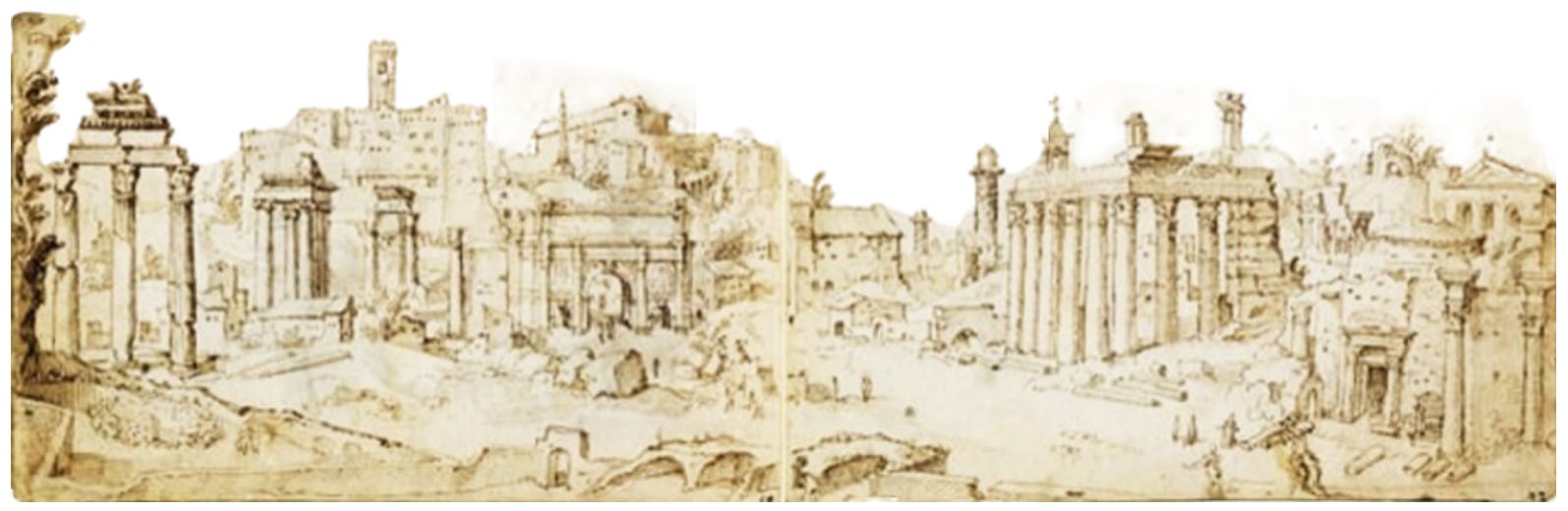
1.6.1 Christianity Ends Science & Empire?
Was it a bad thing for Jerusalem to come to Rome and for Christianity to influence the Empire? Edward Gibbon (1737–1794), author of The Decline and Fall of the Roman Empire, sure thought so:
“[The Christians’] credulity debaſed and vitiated the faculties of the mind ; they corrupted the evidence of hiſtory ; and ſuperſtition gradually extinguiſhed the hoſtile light of philoſophy and ſcience. Every mode of religious worſhip which had been practiſed by the ſaints, every myſterious doctrine which they believed, was fortified by the ſanction of divine revelation, and all the manly virtues were oppreſſed by the ſervile and puſillanimous reign of the monks” [[vii]].
Christianity, in Gibbon’s view, stupefied the Romans, destroying Romans’ cognitive faculties and oppressing their manly virtues.
“What has Athens to do with Jerusalem?” asked the early Church Father, Tertullian of Carthage (AD ~155–220):
What concord is there between the academy and the church? What between heretics and Christians? … Away with all attempts to produce a mottled Christianity of Stoic, Platonic and dialectic composition! We want no curious disputation after possessing Christ Jesus, no inquisition after enjoying the Gospel! With our faith, we desire no further belief. For this is our palmary faith, that there is nothing which we ought to believe besides [[viii]].
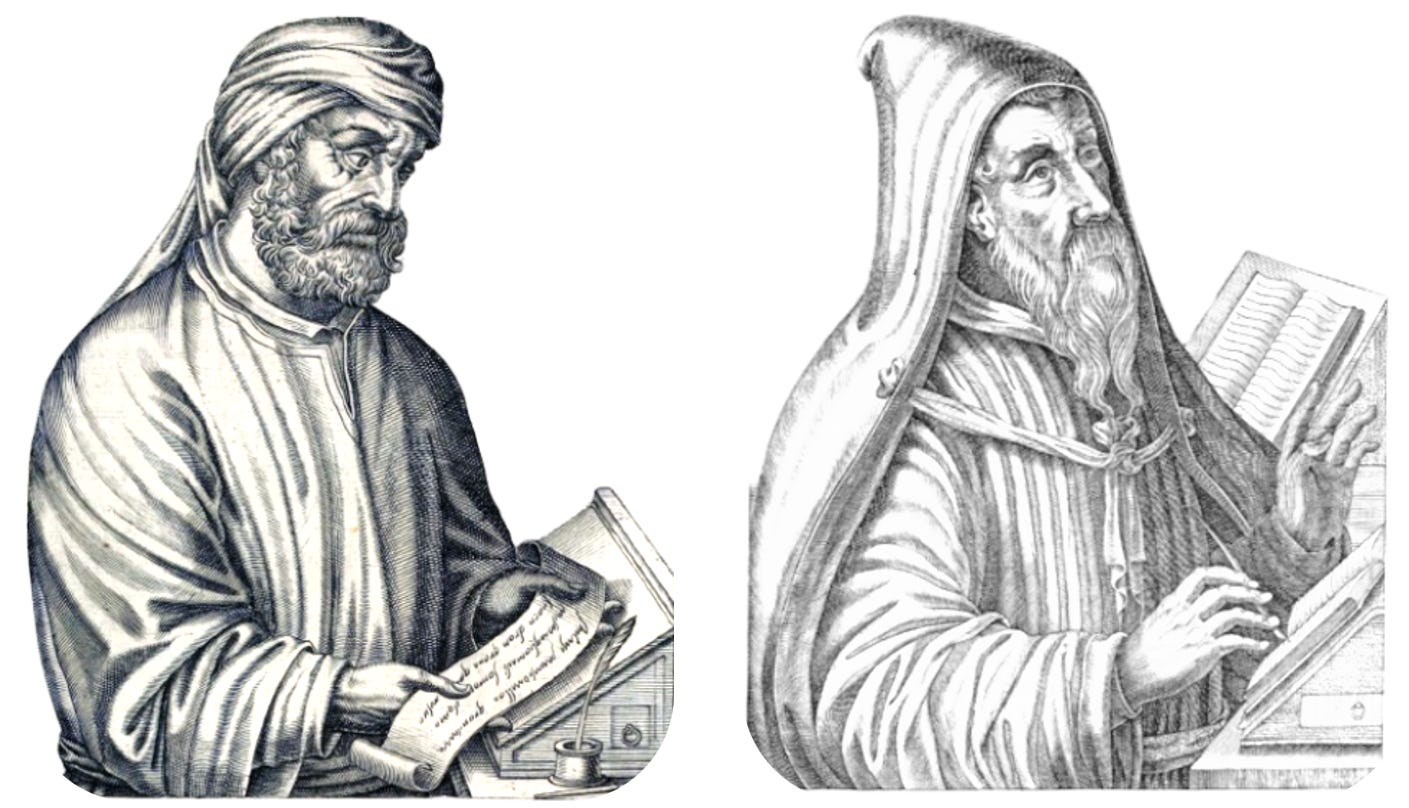
“Showing his disdain for logic and reason, Tertullian wrote that we must believe Christian claims because they are senseless,” argues one polemicist [[xi]]. “Credo quia absurdum,” Tertullian is said to have declared the reason for his belief in Christianity. “I believe because it is absurd…” [[xii], [xiii]]; “it is certain, because it is impossible.”
Saint Augustine (AD 354–430) similarly disdained “pride of vain knowledge” in The City of God:
Hath not God made the wisdom of this world foolishness ? For seeing the world by wisdom knew not God in the wisdom of God, it pleased God by the foolishness of preaching to save them that believe. For the Jews require a sign, and the Grecians seek after wisdom: but we preach Christ crucified, a stumbling-block unto the Jews, and foolishness unto the Grecians [[xiv]].
“Augustine was not interested in the physical world; he possessed none of the natural curiosity of the Greeks. Instead, he had a fear of falling into intellectual pride for prying into God’s secrets,” argues one critic [[xv]].
For the Christian, it is enough to believe that the cause of all created things, whether in heaven or on earth, whether visible or invisible, is nothing other than the goodness of the Creator, who is the one and true God [[xvi]].
Enlightenment thinkers pointed the finger of blame at Christianity, not only for the fall of Rome, but also for the slow development of science during the “Dark” and Medieval Ages. We saw in Book I how progress in philosophy and science by Saint Albert of Cologne or “Albertus Magnus” (~1200–1280), Saint Thomas Aquinas (1224–1274), Robert Grosseteste (~1168–1253), Roger Bacon (~1220–1292), and their medieval successors was ignored by Protestant and “Enlightenment” thinkers eager to downplay the accomplishments of Catholic rivals.
2.2 Early & Medieval Physics

Working from Aristotle’s premise that celestial motion is circular, his successors developed a geocentric model for celestial motion. The result, attributed to Claudius Ptolemy (~AD 90–~168), yielded a remarkably accurate mathematical description of the relative motion of the planets with respect to the celestial firmament. In the simplest form, each pl…
“It will, therefore, be unnecessary to go into any detail respecting the history of the school philosophy of the thirteenth, fourteenth, and fifteenth centuries,” argued historian of science, William Whewell (1794–1866). “We may suppose it to have been, during the intermediate time, such as it was at first and at last” [[xvii]]. This despite Whewell acknowledging that:
Roger Bacon’s works are not only so far beyond his age in the knowledge which they contain, but so different from the temper of the times, in his assertion of the supremacy of experiment, and in his contemplation of the future progress of knowledge, that it is difficult to conceive how such a character could then exist [[xviii]].
Another writes, “The history of science in the Middle Ages makes but sorry reading. It was, so far as science is concerned, a period of ignorance, misunderstanding, and neglect” [[xix]]. Ernst Mach (1838–1916) in his classic The Science of Mechanics cites no authority after Archimedes (287–212 BC) and before Leonardo (1452–1519) [[xx]]. Voltaire (1698–1778) claimed that in the thirteenth century, we “passed from savage ignorance to scholastic ignorance,” [[xxi]] and that “scholastic philosophy, bastard daughter of Aristotle’s philosophy badly translated and understood, caused more error for reason and good education than the Huns and Vandals” [[xxii]].
For all the criticism leveled at medieval science, “[t]he most infamous episode of conflict between science and religion is the case of Galileo’s clash with the Church” [[xxiii]]. We take up Galileo and Enlightenment historiography in the following section.
That’s all for now. Remember always to keep calm, and make physics great again.
See you next week,
Hans
P.S. Pick up your copy of Fields & Energy Book I: Fundamentals and Origins of Electromagnetism, if you haven’t already:
Next time: II 1.6.2 Galileo & Enlightenment Historiography
Enjoyed the article, but maybe not quite enough to spring for a paid subscription?
Then click on the button below to buy me a coffee. Thanks!

Full Table of Contents [click here]
Follow Online:
You may follow me online in other places as well:
Telegram: 𝔸𝕖𝕥𝕙𝕖𝕣𝕔𝕫𝕒𝕣’𝕤 𝔸𝕖𝕥𝕙𝕖𝕣𝕤𝕥𝕣𝕖𝕒𝕞
Gab: @aetherczar
Twitter: @aetherczar
Amazon: Hans G. Schantz
References
[[i]] Paterson, Isabel (1886–1961), The God of the Machine, Palo Alto, California: Palo Alto Book Service, 1943, pp. 32-33. See: https://amzn.to/49JHRk1.
[[ii]] Paterson, Isabel (1886–1961), The God of the Machine, Palo Alto, California: Palo Alto Book Service, 1943, pp. 32-33. See: https://amzn.to/49JHRk1.
[[iii]] Acts Chapters 23-28. Tentmaker, see Acts 18:3.
[[iv]] Paterson, Isabel (1886–1961), The God of the Machine, Palo Alto, California: Palo Alto Book Service, 1943, p. 25. See: https://amzn.to/49JHRk1.
[[v]] Heemskerck (1498–1574), Maarten van, illustrator “Roman Forum, seen from the Palatine Hill.” Public Domain. Two sketches merged together. See: https://recherche.smb.museum/detail/999234/forum-romanum-vom-palatin-aus-gesehen
[[vi]] Ciontu, Oana Maria, “The First Generation of Netherlandish Artists in Rome and the Functions of Their Drawings of Ancient Ruins,” Revista de Artă și Istoria Artei: RAIA, vol. V, 2023, pp. 179-186. See: https://biblioteca-digitala.ro/reviste/Revista-Arta-Istoria-Artei/dl.asp?filename=Revista-de-Arta-si-Istoria-Artei-nr-5-2023-15.pdf
[[vii]] Gibbon, Edward, (1737–1794), Decline and Fall of the Roman Empire, vol. XI, 1792, Ch. 37 p. 268. See: https://archive.org/details/bim_eighteenth-century_decline-and-fall-octav_gibbon-edward-the-hist_1792_6/page/268/mode/2up
[[viii]] Tertullian (AD ~155–220), De praescriptione haereticorum (On the prescription of heretics), Chapters VII-VIII, ~AD 197-203. See: https://www.tertullian.org/works/de_praescriptione_haereticorum.htm
[[ix]] Thevet, André, (1502-1590), Les vrais pourtraits et vies des hommes illustres grecz, latins et payens, 1584, p. 114. Portrait of Tertullian (AD ~155–220), prolific early Christian author from Carthage. See: https://archive.org/details/lesvraispourtrai01thev/page/n265/mode/2up
[[x]] Thevet, André, (1502-1590), Les vrais pourtraits et vies des hommes illustres grecz, latins et payens, 1584, p. 114. Portrait of Tertullian (AD ~155–220), prolific early Christian author from Carthage. See: https://archive.org/details/lesvraispourtrai01thev/page/n265/mode/2up
[[xi]] Seiler, Frederick M., God Versus Nature: The Conflict Between Religion and Science in History, Rhinebeck, New York: 2020, p. 42. See: https://amzn.to/49s3BzM.
[[xii]] Tertullian, De carne Christi (On the Flesh of Christ), Chapter V, ~AD 197-203. See: https://www.tertullian.org/works/de_carne_christi.htm. As we shall see, that quote is a later distortion.
[[xiii]] Sider, Robert D. “CREDO QUIA ABSURDUM?” Classical World, vol. 73, April-May 1980, pp 417-9. doi:10.2307/4349233. See: https://www.tertullian.org/articles/sider_credo.htm
[[xiv]] Saint Augustine (AD 354–430), The City Of God (de Civitate Dei), vol. 2, Book X, Ch. XXVIII, London: J.M. Dent & Sons, Ltd., 1945, p. 303. Originally AD 413–426. Also: “…pride of vain knowledge,” Book X, Ch. XXVIII, p. 302. See: https://archive.org/details/in.ernet.dli.2015.12637/page/n373/mode/2up
[[xv]] Seiler, Frederick M., God Versus Nature: The Conflict Between Religion and Science in History, Rhinebeck, New York: 2020, p. 42. See: https://amzn.to/49s3BzM.
[[xvi]] Augustine (AD 354–430) De Genesi ad litteram (On the Literal Meaning of Genesis), Book I, chapter 2, section 4. Written c. AD 401–415.
[[xvii]] Whewell, William, History of the Inductive Sciences, From the Earliest to the Present Time, 3rd ed. vol. 1 of 3, London: John W. Parker and Son, West Strand, 1857, p. 9. See: https://amzn.to/3NuZx7u.
[[xviii]] Whewell, William, History of the Inductive Sciences, From the Earliest to the Present Time, 3rd ed. vol. 1 of 3, London: John W. Parker and Son, West Strand, 1857, p. 326. See: https://amzn.to/3NuZx7u.
[[xix]] Hart, Ivor B., Makers of Science: Mathematics, Physics, Astronomy, London: Oxford University Press, 1924, pp. 52-4. See: https://archive.org/details/in.ernet.dli.2015.16925/page/n51/mode/2up
[[xx]] Truesdell, Clifford A., Essays in the History of Mechanics, New York: Springer-Verlag, 1968, p. 27.
[[xxi]] Grant, Edward, God & Reason in the Middle Ages, Cambridge University Press, 2004, p. 324. See: https://amzn.to/3YjDzcT. “On passa, dans ce xiiie siècle, de I’ignorance sauvage à I’ignorance scolastique.” Essai sur les Mœurs, I, in Œuvres complètes de Voltaire, nouvelle édition avec notices, préfaces, variantes, table analytique, les notes de tous les commentateurs et des notes nouvelles …, 52 vols. (Paris: Garnier Frères, 1877-1885), vol. 11 (1878), p. 506.
[[xxii]] Grant, Edward, God & Reason in the Middle Ages, Cambridge University Press, 2004, p. 324. See: https://amzn.to/3YjDzcT. “La théologie scolastique, fille bâtarde de la philosophie d’Aristote, mal traduite et méconnue, fit plus de tort à la raison et aux bonnes études que n’en avaient fait les Huns et les Vandales.” Ibid., vol. 12 (1878): Essai sur les mœurs, II, p. 61.
[[xxiii]] Seiler, Frederick M., God Versus Nature: The Conflict Between Religion and Science in History, Rhinebeck, New York: 2020, p. 89. See: https://amzn.to/49s3BzM.
Oh, how the slurs against the Church committed in the name of Galileo just get right up my jumper. Galileo was convicted of mocking his best friend and patron, the Pope, in book form. The trial had nothing whatsoever to do with the scientific content of the book in question, despite claims to the contrary. Turns out, the Church has views about naming a character obviously based on the Pope "Simpleton". The Church actually approved of lowering the esteem and hubris with which humanity held itself, by removing the Earth from the center of creation.
A lie, repeated often enough, becomes the truth in most minds.
You are going to discuss science in the Eastern Empire? You know the people who consider Tertullian and Augustine a bit nuts? Tertullian was actually called a heretic, and in the East, Augustine* came close.
John of Damascus: Those who set science and religion against each other do justice to neither.
*Opinions vary.