


Galileo (1564–1642) was convinced that the Copernican heliocentric system was not merely a useful calculational aid but a true account of celestial reality. He received permission to discuss his perspective in his 1632 Dialogue Concerning the Two Chief World Systems, but Catholic authorities reconsidered their initial approval. Pope Urban VIII (1568–1644) was furious that Galileo had placed his arguments in the mouth of Simplicio, the dialogue’s dim-witted defender of geocentrism. Galileo was tried, condemned, and spent the rest of his life under house arrest. He was nevertheless able to complete his most comprehensive work while under house arrest, Discourses and Mathematical Demonstrations Relating to Two New Sciences, smuggled out of Italy and printed in Leiden, Netherlands in 1638 [[ii]].
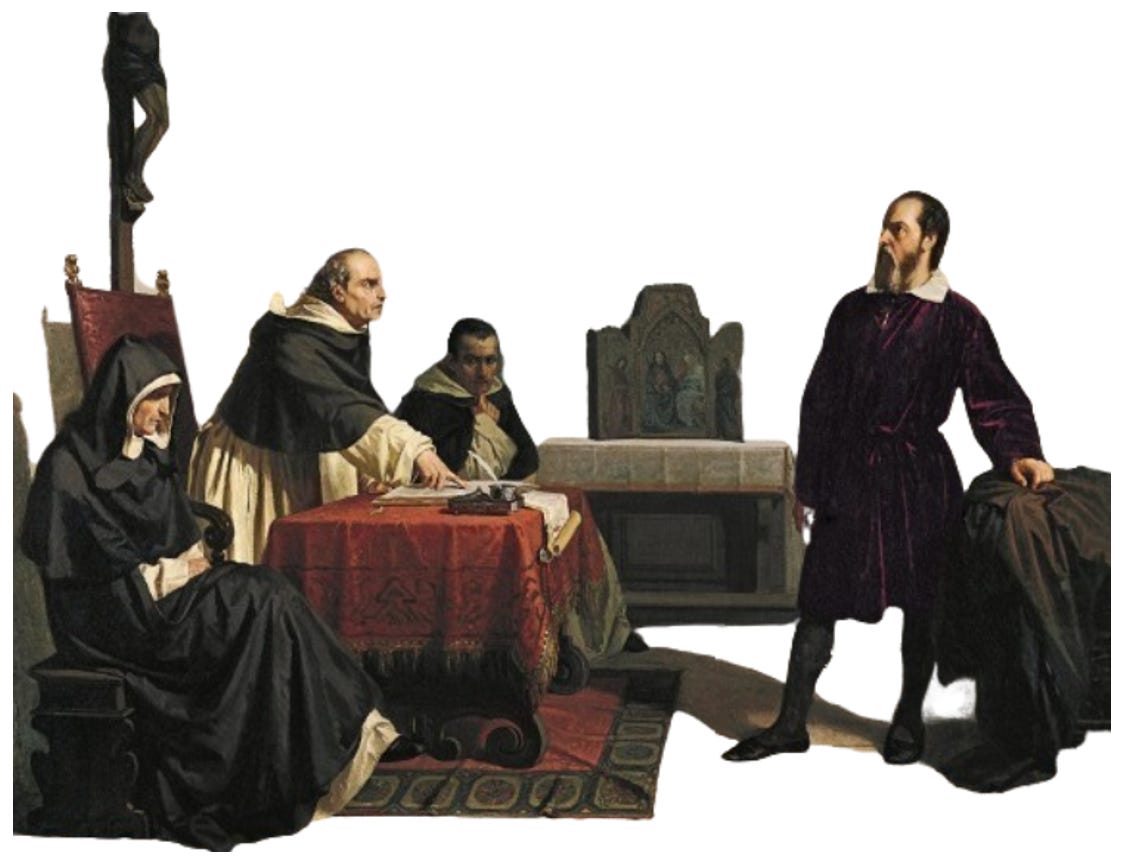
The emerging Enlightenment historiography held up Galileo as a martyr to science and downplayed or ignored the medieval foundations of his work, and modern polemicists still consider his fate “a paradigm case of the conflict between religion and science” [[iii]]. Certainly, the Catholic Church’s prosecution of Galileo did have a chilling effect on other scholars. René Descartes (1596–1650) abandoned his own plan to publish Le Monde, a work that treated heliocentrism as physically real, on hearing of the condemnation of Galileo [[iv], [v]].
Others like Pierre Gassendi (1592–1655), for example, defended aspects of atomism and Copernican astronomy while carefully avoiding theological confrontation [[vii]]. The experience of Galileo also reinforced the use of informal networks and private correspondence for discussing controversial ideas. Marin Mersenne (1588–1648) functioned as a central clearinghouse for scientific communication, allowing scholars to exchange results while minimizing public exposure [[viii]]. This “Republic of Letters” mitigated some of the chilling effect but did not eliminate self-censorship.
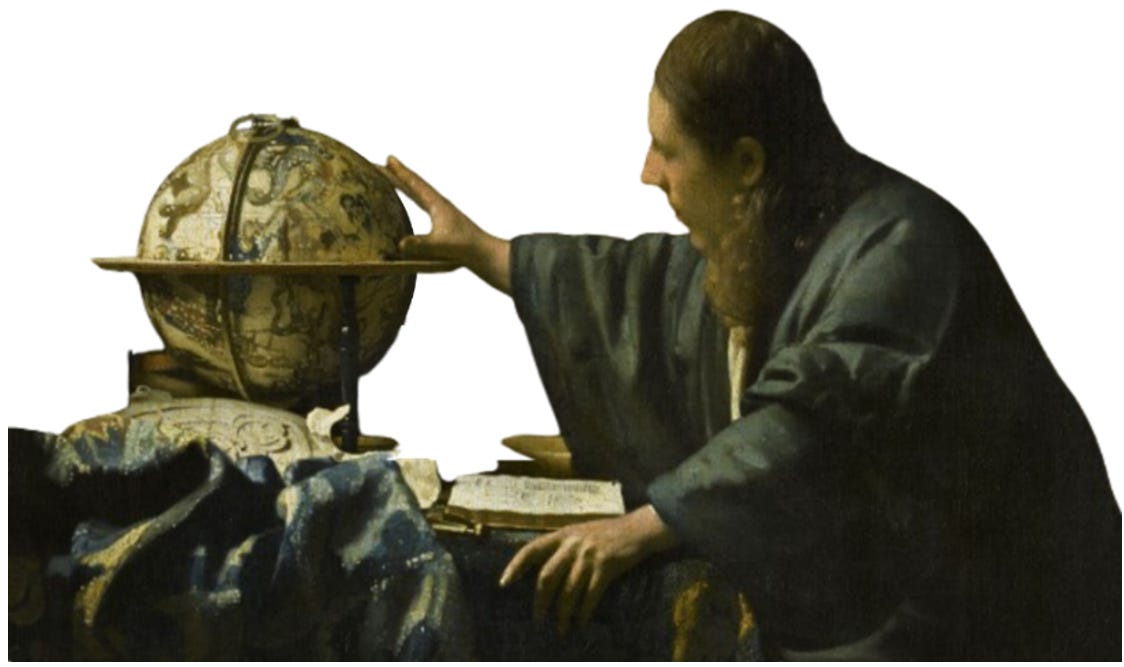
Enlightenment historiography also embraced Francis Bacon (1561–1626) as “the supreme Legislator of the modern Republic of Science” [[ix]], the figure who inaugurated modern science by diagnosing the failures of inherited knowledge and supplying the correct method for investigating nature. Bacon notoriously ignored predecessors in the scientific method, like Robert Grosseteste (~1168-70–1253) and Roger Bacon (~1219-20–~1292), and he cast scorn upon his contemporaries, like William Gilbert (1544–1603) of magnetism fame, who were successfully applying the scientific method. Nevertheless, the Founders of the Royal Society and their successors adopted Francis Bacon as their inspiration and spiritual patron [[x]].
My discussion of Bacon from Book I:

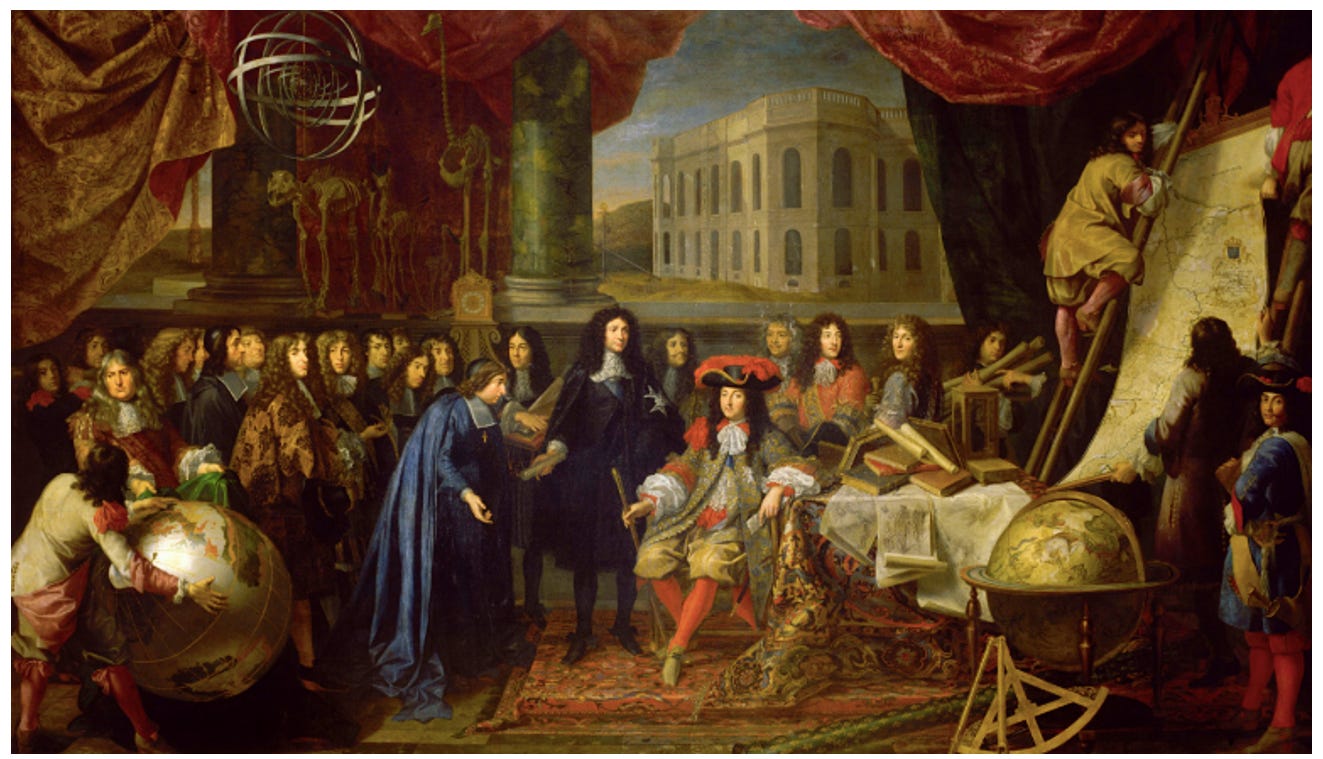
Not to be outdone, the French founded their Academy of Sciences and of Paris Observatory a few years later.
Enlightenment historiography of science framed the rise of modern science as a liberation from medieval Catholic authority and monastic culture, portraying the past as an age of superstition overcome by reason, experiment, and individual inquiry. In England, this narrative served a specific political and cultural function: it retroactively justified Henry VIII’s (1491–1547) dissolution of the monasteries (1536–1541) and the Anglican schism by depicting monasteries as intellectually sterile, parasitic, and hostile to scientific progress [[xii]]. The loss of monastic learning was thus reinterpreted not as cultural destruction but as a necessary clearing of the ground for modern knowledge [[xiii]].
In the Anglocentric and Protestant-friendly story, modern science flourished where Rome’s authority had been broken and where Scripture, nature, and reason could be read without clerical mediation. This narrative minimized the continuity between medieval scholasticism and early modern science and downplayed Catholic contributions, especially those of religious orders such as the Dominicans, Franciscans, and Jesuits.
Continental Enlightenment thinkers shared much of this anti-Catholic framing, though with different political aims. Voltaire (1694–1778), for example, relentlessly used the Galileo affair as a symbol of clerical tyranny, while Denis Diderot (1713–1784) and Jean le Rond d’Alembert (1717–1783) portrayed monasticism as socially unproductive in the Encyclopédie [[xiv]].
“Men will only be free when the last king is strangled with the entrails of the last priest,” [[xvii], [xviii]] Diderot is said to have declared. Their hostility to Catholicism aligned naturally with the English Whig narrative, even though it arose from opposition to absolutism and clerical privilege rather than from a need to justify a national church. This convergence produced a trans-European Enlightenment narrative in which Catholic institutions were cast as the principal enemies of science, and Protestant or secular societies as its natural home.
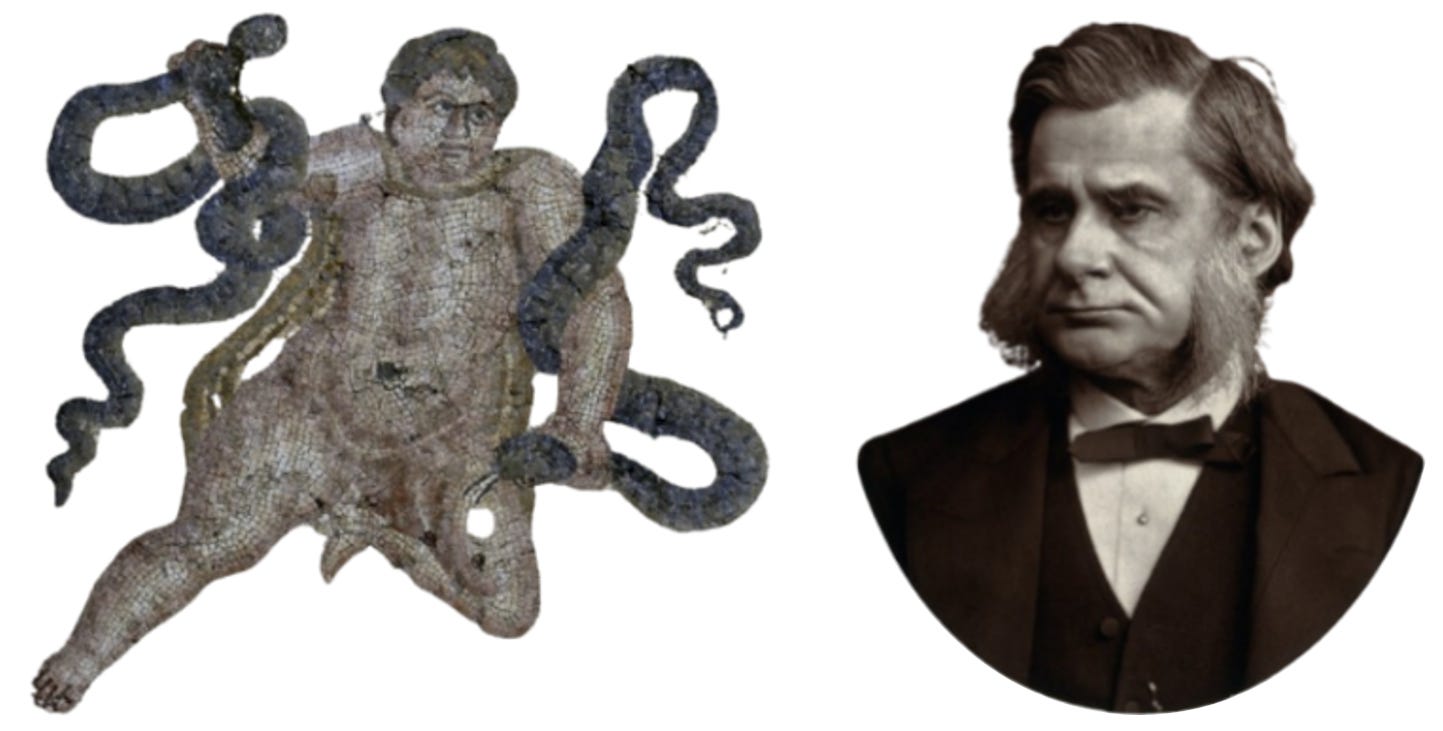
The theme that Christianity was the enemy of science hit a crescendo in the late nineteenth century. “The antagonism we thus witness between Religion and Science is the continuation of a struggle that commenced when Christianity began to attain political power,” argued John William Draper (1811–1882), author of History of the Conflict Between Religion and Science in 1874 [[xix]]. “[A]ntagonism between religion and science had existed from the earliest days of Christianity…” [[xx]]. Andrew Dickson White (1832–1918) saw it not as a conflict between science and religion, but rather as a “struggle between Science and Dogmatic Theology” [[xxi]]. Thomas Henry Huxley (1825–1895), a man dubbed “Darwin’s Bulldog” for his fervent advocacy of evolution, pulled no punches, declaring that “extinguished theologians lie about the cradle of every science, as the strangled snakes beside that of Hercules…” [[xxii]].
That’s all for now. Remember always to keep calm, and make physics great again.
See you next week,
Hans
P.S. Pick up your copy of Fields & Energy Book I: Fundamentals and Origins of Electromagnetism, if you haven’t already:
Next time: II 1.6.3 Christianity & Pagan Philosophy
Enjoyed the article, but maybe not quite enough to spring for a paid subscription?
Then click on the button below to buy me a coffee. Thanks!

Full Table of Contents [click here]
Follow Online:
You may follow me online in other places as well:
Telegram: 𝔸𝕖𝕥𝕙𝕖𝕣𝕔𝕫𝕒𝕣’𝕤 𝔸𝕖𝕥𝕙𝕖𝕣𝕤𝕥𝕣𝕖𝕒𝕞
Gab: @aetherczar
Twitter: @aetherczar
Amazon: Hans G. Schantz
References
[[i]] Cristiano Banti’s 1857 painting Galileo facing the Roman Inquisition. See: https://commons.wikimedia.org/wiki/File:Galileo_facing_the_Roman_Inquisition.jpg

[[ii]] Hannam, James, The Genesis of Science: How the Christian Middle Ages Launched the Scientific Revolution, Washington: Regnery, 2011, pp. 303-343.
[[iii]] Smith, George H., Atheism: The Case Against God, Buffalo, NY: Prometheus Books, 1989, p. 113.
[[iv]] Descartes, René, The World and Other Writings, trans. Stephen Gaukroger, Cambridge University Press, 1998, pp. vi-vii. ISBN 978-0521637307. See: https://www.amazon.com/Descartes-Writings-Cambridge-History-Philosophy/dp/0521631580?asin=0521631580&revisionId=&format=4&depth=1
[[v]] Crombie, A.C., Augustine to Galileo, vol. II, Cambridge, Massachusetts: Harvard University Press, 1961, pp. 160, 217-218.

[[vii]] Crombie, A.C., Augustine to Galileo, vol. II, Cambridge, Massachusetts: Harvard University Press, 1961, pp. 262, 311-313.
[[viii]] Hall, A. Rupert, From Galileo to Newton, New York: Dover Publications, 1981, pp. 135-136. See: https://archive.org/details/fromgalileotonew0000hall/page/134/mode/2up. See also: https://amzn.to/4aNuQak
[[ix]] Peltonen, Markku, The Cambridge Companion to Bacon, Cambridge: University Press, 1996, p. 1 (Introduction). Quoting William Whewell. See: https://www.cambridge.org/core/books/abs/cambridge-companion-to-bacon/introduction/A96E864CEEB80C19BD0A79E22FE71917
[[x]] Hall, A. Rupert, From Galileo to Newton, New York: Dover Publications, 1981, pp. 103–104. See: https://archive.org/details/fromgalileotonew0000hall/page/104/mode/2up. See also: https://amzn.to/4aNuQak
[[xi]] A 17th-century painting by Henri Testelin titled Establishment of the French Academy of Sciences and of Paris Observatory. Louis XIV of France (r. 1643-1715) is shown being presented the founding members of the Academy and Observatory (shown in the background) c. 1667. (Palace of Versailles). See: https://www.worldhistory.org/image/18039/establishment-of-the-french-academy-and-paris-obse/
[[xii]] Voltaire, Treatise on Tolerance (1763). “…the monkish superstitions from Rome do nothing but evil.” See: https://monadnock.net/voltaire/tolerance-17.html
[[xiii]] Duffy, Eamon, The Stripping of the Altars: Traditional Religion in England, 1400-1580, Yale Universtiy Press, 2022, pp. unavailable [Kindle ~475]. See: https://amzn.to/44Xp16s.
“The single most revolutionary aspect of the English Reformation was undoubtedly the still relatively religiously conservative king’s total abolition of the monastic life, and with it a Christian institution which had been a source of idealism, inspiration and renewal for more than a millennium. In the space of five years, 850 religious houses, representing 19 different religious orders, were suppressed, their personnel dispersed, their property confiscated, in many cases their very fabric dismantled, and most of the greatest buildings and finest libraries in England destroyed.”
[[xiv]] “MONASTERE,” article by Jaucourt, Louis, chevalier de (1704-1780).
“The first monasteries preserved religion in miserable times: they were havens for doctrine and piety, while ignorance, vice, and barbarity flooded the rest of the world. The ancient tradition was followed there, both for the celebration of divine offices and for the practice of Christian virtues, of which the young saw living examples in the elders. Books from several centuries were kept there, and new copies were written: this was one of the monks’ occupations; and we possess a quantity of excellent works that would have been lost to us, were it not for the libraries of the monasteries.
“However, since the Renaissance and the establishment of the Reformation have completely changed in Europe, the prodigious number of monasteries that continued to exist within the Catholic Church has become a burden on the public, oppressive, and clearly contributing to depopulation. A simple glance at Protestant and Catholic countries is enough to convince oneself of this. Commerce revives everything in the former, while monasteries bring death.”
[[xv]] Antakya Archaeological Museum Herakles mosaic: Herakles killed two of Hera’s serpents while an infant. Quite an infant, though! The mosaic is from Antakya, second century AD. See: https://commons.wikimedia.org/wiki/File:Antakya_Archaeological_Museum_Herakles_mosaic_6087.jpg

[[xvi]] Thomas Henry Huxley, 1880. Photograph by Lock & Whitfield. Wellcome Collection gallery; Library reference: ICV No 27052; Photo number: V0026596; Full Bibliographic Record: http://catalogue.wellcomelibrary.org/record=b1161214. See: https://commons.wikimedia.org/wiki/File:Thomas_Henry_Huxley._Photograph_by_Lock_%26_Whitfield._Wellcome_V0026596.jpg

[[xvii]] This quote is commonly misattributed to Diderot. Diderot said: “…its hands would weave the entrails of the priest, For the lack of a cord with which to strangle kings,” in his poem, “Les Éleuthéromanes.” It actually originates with Jean Meslier (1664-1729), a French Catholic priest. See: https://history.stackexchange.com/questions/27328/did-diderot-say-men-will-never-be-free-until-the-last-king-is-strangled-with-th
[[xviii]] Smith, George H., “Freethought and Freedom: Jean Meslier and Christian Ethics,” August 14, 2015. See: https://web.archive.org/web/20150826011103/https://www.libertarianism.org/columns/freethought-freedom-jean-meslier-christian-ethics
[[xix]] Draper, John William (1811–1882), History of the Conflict Between Religion and Science, New York, D. Appleton and Company: 1875, p. vi.
See: https://archive.org/details/historyofconfli00drap/page/n13/mode/2up See also: https://www.gutenberg.org/files/1185/1185-h/1185-h.htm
[[xx]] Draper, John William (1811–1882), History of the Conflict Between Religion and Science, New York, D. Appleton and Company: 1875, p. 218. See: https://archive.org/details/historyofconfli00drap/page/n247/mode/2up
[[xxi]] White, Andrew Dickson, (1832-1918) A history of the warfare of science with theology in Christendom, vol. 1, London: Macmillan and Company: 1897, p. ix. See: https://archive.org/details/historyofwarfare01whit/page/n12/mode/1up
[[xxii]] Huxley, Thomas Henry (1825-1895), Darwiniana: essays, New York: Apleton, 1894, p. 52. See: https://archive.org/details/cu31924012238394/page/52/mode/2up
No one reads John of Damascus: Those who set Religion and Science in opposition do justice to neither.
Can you provide examples of Catholic Church encouraging scientific inguiry?