

Oliver Lodge’s Legacy
Liverpool’s Wireless Pioneer

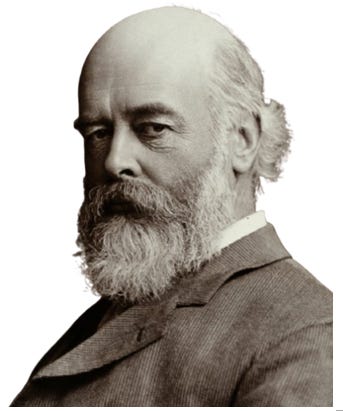
I received a generous invitation to deliver the conference banquet after-dinner speech at The 2026 IEEE International Workshop on Antenna Technology (iWAT) in Liverpool, UK, this week. Liverpool’s home town hero, Sir Oliver Joseph Lodge, was a popular author, a talented inventor, and a genuine wireless pioneer. I’m sure there are experts in Liverpool who know far more about the details of Oliver Lodge’s career than I do. However, what better way to illustrate the global and international significance of your home town hero than to bring in someone from outside the country to testify to that fact? That’s where I come in.
I’ve previously written about Lodge within the broader context of UWB antenna history. See for instance, “Three centuries of UWB antenna development,” 2012 IEEE International Conference on Ultra-Wideband (ICUWB), September 2012, DOI: 10.1109/ICUWB.2012.6340483, and the lengthier discussion in The Art and Science of Ultrawideband Antennas, 2nd ed.
In my after-dinner speech, I provide a brief biographical overview of Lodge before focusing on three key ideas Lodge published - ideas that not only influenced the course of wireless history, but also might help us reconcile quantum mechanics with electromagnetism. What three ideas? Read on for the full abstract.
Oliver Lodge’s Legacy
Liverpool’s Wireless Pioneer
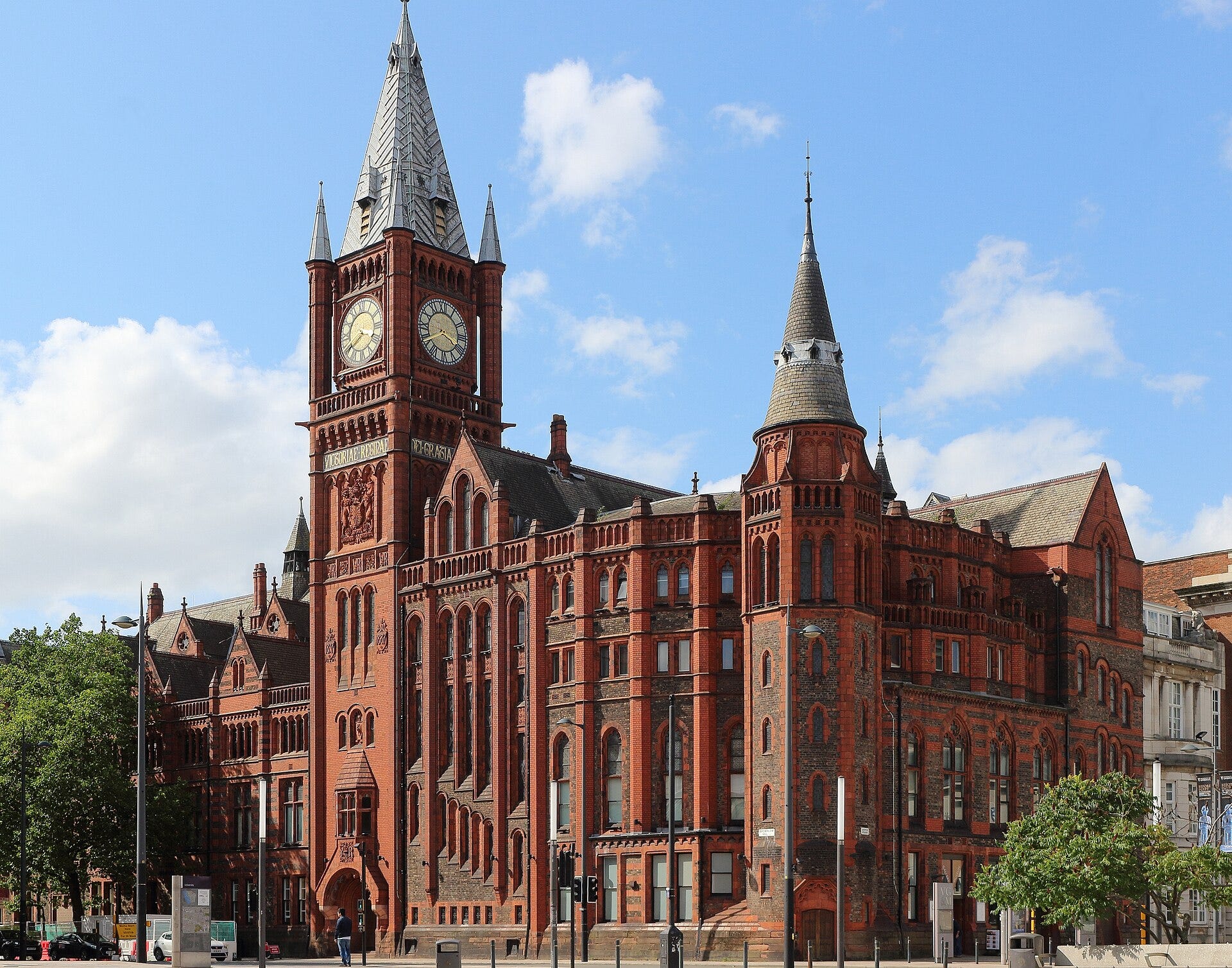
Sir Oliver Joseph Lodge (1851–1940) stands among the pioneers of wireless science, yet his legacy is often compressed into a footnote between Heinrich Hertz (1857–1894) and Guglielmo Marconi (1874–1937). This talk restores Lodge to his proper place, beginning with his Liverpool years, first as Professor of Physics at University College Liverpool and later as a central figure in establishing the city as a hub of wireless research.
My talk surveys his experimental confirmation of Maxwellian waves, his refinement of Édouard Branly’s (1844–1940) coherer into a practical detector, and his pioneering work on tuned (“syntonic”) circuits, which laid the foundation for frequency-selective wireless communication.
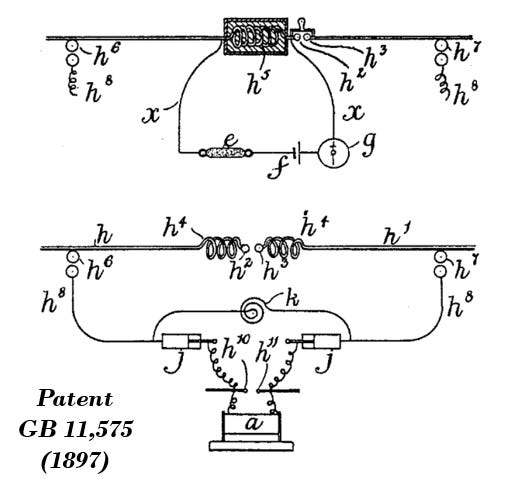
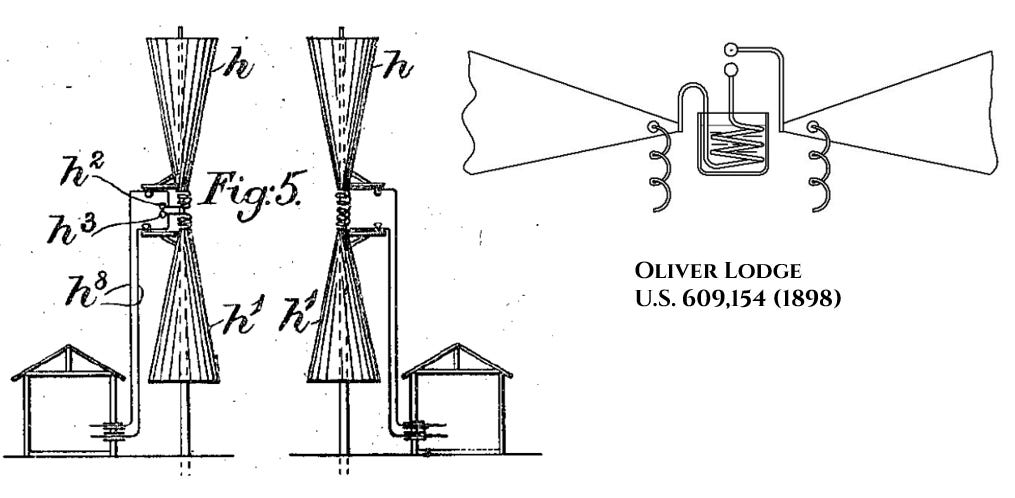
The core of the talk examines three strands of Lodge’s work that were subsequently neglected and later rediscovered, often without recognition of their origin.
First, his early exploration of biconical and bowtie antennas anticipated ultrawideband practice but fell out of use until their rediscovery in the 1930s.
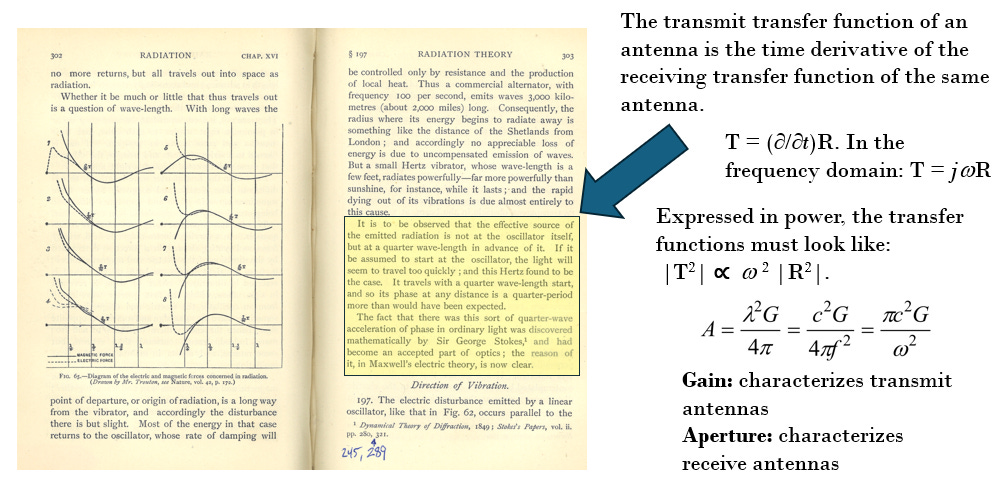
Second, Lodge’s observation of a ninety-degree phase advance associated with transmission contains the seed of a deeper time-derivative asymmetry between transmit and receive antenna transfer functions. This insight proves essential for understanding the difference between “gain” and “aperture,” how ultrawideband links behave, and the phase properties exploited in near-field electromagnetic ranging.
Third, Lodge’s identification of the importance of Oliver Heaviside’s (1850–1925) principle of equal electric and magnetic energy in propagating waves not only led to the Telegrapher’s Equations but also exposes limitations in Paul Dirac’s (1902–1984) dismissal of photon–photon interference.
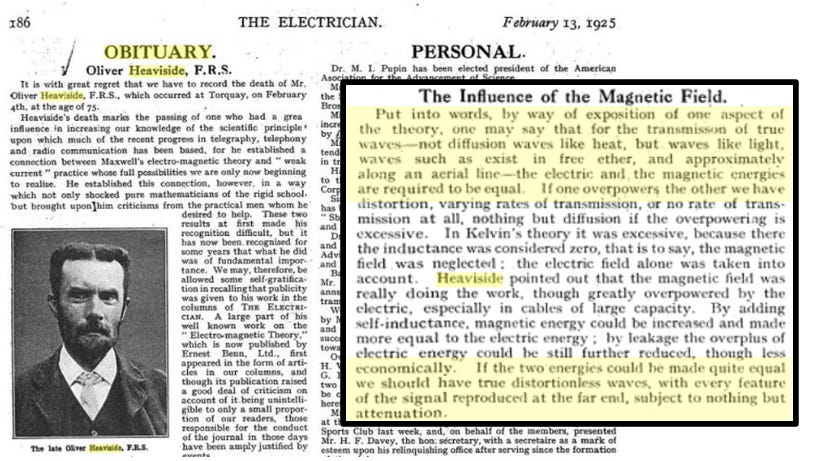
Lodge’s and Heaviside’s insights suggest a more coherent view in which fields guide the flow of energy in both classical electromagnetism and in quantum mechanics.
Here’s Oliver Lodge’s obituary for Oliver Heaviside.
"Oliver Heaviside. An Appreciation : The Personal Equation : The Work of a Genius Elucidated"

For many years, Oliver Heaviside, The Man, by his friend Dr. G.F.C. Searle was the only biography available for Heaviside. Despite being revived and republished in 1987 by Ivor Catt, Searle’s biography remains hard to find. Forrest Bishop generously made a scanned copy available online
By tracing these lines from Liverpool to modern wireless, this talk argues that Lodge’s contributions were not merely precursory but remain technically and conceptually relevant today. His legacy illustrates how foundational insights can be overlooked, rediscovered, and brought to fruition in contemporary practice.
Speaker Biography
Hans G. Schantz is an electromagnetic scientist, inventor, and author known for his contributions to antenna theory, ultrawideband and electrically-small antennas, near-field systems, and the fundamental physics of radiation and fields. As Senior Principal Technical Staff at nou Systems, Inc. and as Founder and Principal Scientist for The Society for Post-Quantum Research, LLC, he continues producing innovations that bridge rigorous theory with practical engineering. Dr. Schantz is the author of The Art and Science of Ultrawideband Antennas and numerous technical papers and patents, and he is widely recognized for advancing the understanding of how electromagnetic systems store, radiate, and exchange energy. His recent work explores deep connections between classical electromagnetism, quantum limits, and the physical foundations of radiation, with an emphasis on restoring conceptual clarity and unifying principles across physics and engineering. As a science fiction writer, he brings a storyteller’s eye to his technical writing. Dr. Schantz earned his Ph.D. in theoretical physics from the University of Texas at Austin in 1995 for his theoretical study of how dipoles convert bound or reactive energy into radiation.
That’s all for now. Remember always to keep calm, and make physics great again.
See you next week,
Hans
P.S. Pick up your copy of Fields & Energy Book I: Fundamentals and Origins of Electromagnetism, if you haven’t already:
Enjoyed the article, but maybe not quite enough to spring for a paid subscription?
Then click on the button below to buy me a coffee. Thanks!

Follow Online:
You may follow me online in other places as well:
Telegram: 𝔸𝕖𝕥𝕙𝕖𝕣𝕔𝕫𝕒𝕣’𝕤 𝔸𝕖𝕥𝕙𝕖𝕣𝕤𝕥𝕣𝕖𝕒𝕞
Gab: @aetherczar
Twitter: @aetherczar
Amazon: Hans G. Schantz
Thanks for everything ya do Hanz, this is a great read as always. Just recieved my copy of Fields and Energy v1, very excited to dive in!