


The program for Heaviside the Man: His Life and Legacy is taking shape, with an increasingly strong lineup of historians, physicists, and electrical engineers exploring Oliver Heaviside’s life, work, and continuing influence on electromagnetic theory.
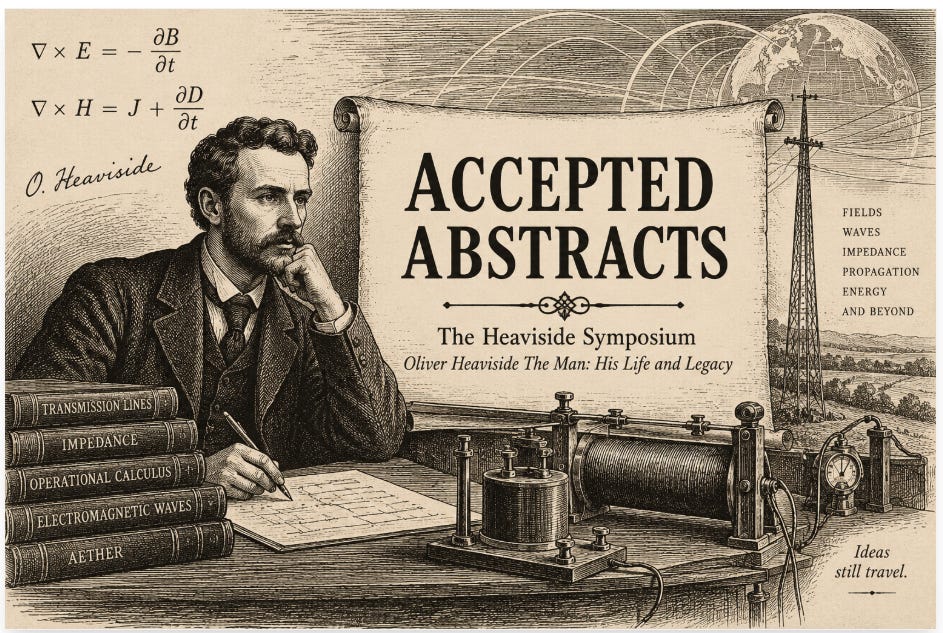
We now have three keynote presentations and a growing slate of contributed papers covering the Maxwellians, the development of Maxwell’s equations, operational calculus, quaternions and vector analysis, Heaviside’s lesser-known physics, electromagnetic energy flow, transmission lines, and the continuing debate over Heaviside’s concept of the Energy Current.
Call For Papers: The Heaviside Symposium

MLK Day Weekend January 17-18, 2027; Hosted by, Signals: The Museum of the Information Explosion in Huntsville, Alabama. Want to present a paper? Email your title and a 150-200 word abstract at the link in this post. The abstract deadline is October 1, 2026.
There are still two weeks to submit an abstract. If you have work relevant to Heaviside, the Maxwellians, the history or foundations of electromagnetism, transmission-line theory, operational calculus, energy flow, impedance, near fields, potentials and fields, or related subjects, I encourage you to submit a brief abstract and join us.
And whether you plan to present or simply want to attend, registration is open now.
Register for The Heaviside Symposium

Join historians, engineers, physicists, mathematicians, and independent scholars for a day and a half devoted to Oliver Heaviside (1850–1925), his life, his work, and his enduring scientific and engineering legacy.
The symposium will be held January 17–18, 2027, at Signals Museum in Huntsville, Alabama, with the museum tour, dinner, and after-dinner entertainment Sunday evening, followed by the full-day technical conference on Monday.
Accepted Abstracts: So Far!
Here are the presentation abstracts accepted so far:
Keynote: Heaviside and FitzGerald: The Core of the Maxwellian Group
Bruce J. Hunt, The University of Texas at Austin
Oliver Heaviside and George Francis FitzGerald came from opposite poles of the social and intellectual worlds, yet they became close friends and firm allies as central members of the Maxwellian group that disseminated and promoted Maxwell’s theory of the electromagnetic field in the late 1880s and 1890s. Heaviside came from very modest beginnings in London and was entirely self-taught in mathematics and physics, while FitzGerald was the son of a bishop of the Church of Ireland and one of the shining stars of Trinity College Dublin throughout his career. They were brought together in 1888 by their shared interest in Maxwell’s theory and though they only met in person twice, they kept up a lively correspondence that reveals much about both their respective personalities and the development of electromagnetic theory in their time.
Bruce J. Hunt to Keynote The Heaviside Symposium

The Heaviside Symposium is proud to announce that UT Austin Professor Emeritus Bruce J. Hunt, author of The Maxwellians and Imperial Science: Cable Telegraphy and Electrical Physics in the Victorian British Empire will be a keynote speaker at The Heaviside Symposium
The Erasure of the Materialist Approach to Electrodynamics in the 19th Century
John Plaice, Fiat Lux
After Hans-Christian Ørsted announced that a current passing through a metal wire would deflect the direction of a compass placed above or below that wire, André-Marie Ampère, in a very short period, developed a full-fledged theory in 1826 for what he called electrodynamics. This theory presupposed that magnetic attraction and repulsion were the result of the interaction, according to his electric force law, between molecular currents within the magnetized bodies. At the basis of his theory was that an electric current within a wire was from the movement of electrical fluids within the wire.
The idea of Ampère was picked up by Wilhelm Eduard Weber, who worked several decades on the development of his own theory, based on his own force law, first published in 1846, between two electric charges, which took into account their relative velocity and accceleration. From there, he ultimately developed the model for an electric atom, decades before the work of J.J. Thomson and Ernest Rutherford, with charges of one sign orbiting a small nucleus consisting of charges of the opposite sign.
The work of both Ampère and Weber was materialist, working with the idea of electric charges in motion, within a wire or without. This materialist approach to understanding electricity and magnetism was explicitly rejected by British researchers, among whom we find Michael Faraday, William Thomson (Baron Kelvin) and James Clerk Maxwell. Their position was upheld in Germany by Hermann von Helmholtz and his students, and in France by Éleuthère Mascart. Ultimately this latter position was upheld as the correct one, and the materialist approach of Ampère and Weber was erased, to the point where few today know of their work.
In this paper, we will give a historical overview of this transformation, providing quotations from many of the key players through the 19th century.
Heaviside’s Operational Calculus, A Historical Trajectory of Electrical Engineering in the 20th Century
By Marcelo Godoy Simões, Colorado School of Mines
Oliver Heaviside was a self-taught polymath whose work at the end of the 19th century laid the foundations for modern electrical engineering. He is best known for reformulating Maxwell’s quaternionic equations into the four coupled differential equations used today, enabling the derivation of simple wave equations essential for wireless communication. Heaviside’s most revolutionary contribution, the operational calculus, transformed complex differential equations into manageable algebraic expressions by treating derivatives as operators. Despite initial rejection by mathematicians due to a perceived lack of mathematical rigor, his methods proved highly effective for solving practical problems in long-distance telegraphy and circuit transients. Throughout the 20th century, his informal calculus was formalized into the Laplace Transform, a cornerstone of engineering education popularized by figures like Ernst Guillemin at MIT. Heaviside also pioneered terms such as impedance and inductance and predicted the existence of the ionosphere. His results-oriented approach prioritized physical intuition over formal proofs, ultimately establishing electrical engineering as an independent scientific discipline. Today, while computational tools like MATLAB have simplified these processes, Heaviside’s legacy remains central to the theoretical framework of linear systems and signal propagation.
Are Electromagnetic Fields Quaternions After All?
Josh Wilson, nou Systems, Inc., Huntsville, AL USA
While Maxwell’s original formulation of his equations made use of quaternions, Heaviside famously rejected quaternion methods in favor of the vector calculus that became the standard language of classical electromagnetism. We examine the physical motivations and historical circumstances underlying both approaches. We then consider whether modern developments in physics point toward a synthesis of these perspectives. In particular, spacetime (Clifford) algebra provides a relativistically consistent geometric language in which the electric and magnetic fields, spacetime structure, and Maxwell’s equations are naturally unified. From this perspective, Maxwell and Heaviside’s dueling notations can be viewed not simply as a historical curiosity, but as an early step toward an algebraic formulation of electromagnetism that was later refined through spacetime algebra.
Heaviside and “Murder” of the Potentials
Kirk T. McDonald, Joseph Henry Laboratories, Princeton University
In his often flamboyant manner, Heaviside advocated the “murder” of the electromagnetic potentials, although Maxwell had given the vector potential A prominence as the electromagnetic momentum √(4π) qA/c (in Heaviside-Lorentz units) of an electric charge q. The values of the potentials can be changed (by a so-called gauge transformation) with no effect on observable quantities, and so are not “physical”. Yet, quantum theory teaches us that the potentials are even more “fundamental” than they appear in classical theory. I review some of the history of this issue, which bothered Heaviside as well as many physicists even today.
Keynote: The Long Road to Maxwell’s Equations
James Rautio, Sonnet Software
Today, every engineering student learns “Maxwell’s equations” as four elegant equations describing electricity, magnetism, and electromagnetic waves. Yet James Clerk Maxwell never wrote them in that form. His original theory, presented in the 1860s, consisted of a far more complicated mathematical framework that many contemporaries found difficult to understand and few accepted.
This talk traces the remarkable journey from Maxwell’s original work to the concise equations familiar today. It follows the contributions of the four principal “Maxwellians”—Oliver Heaviside, George Francis FitzGerald, Oliver Lodge, and Heinrich Hertz—who simplified Maxwell’s mathematics, established the physical reality of electromagnetic waves, and transformed an obscure theory into the foundation of modern electrical engineering.
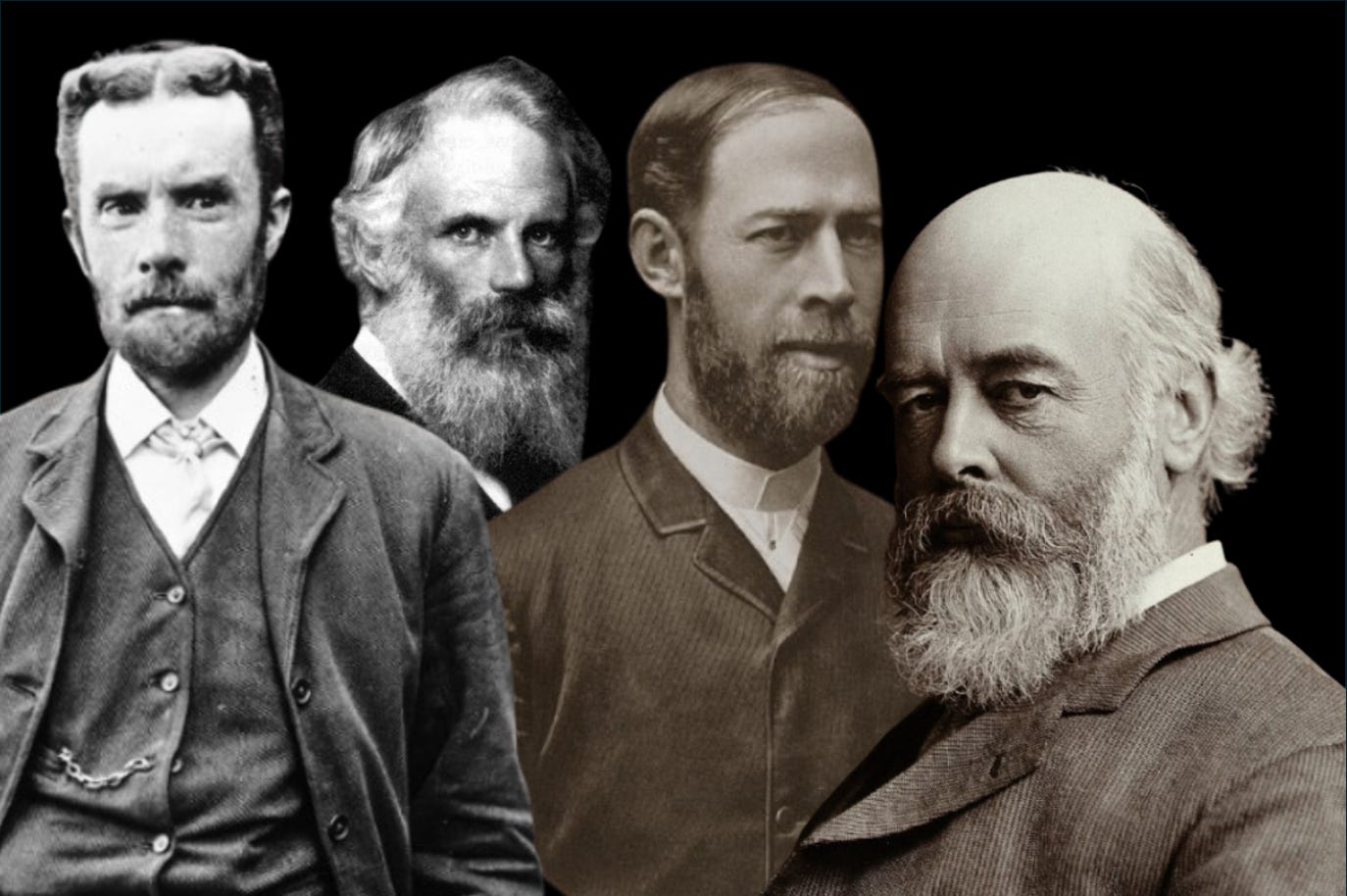
Along the way, the presentation explores why Maxwell’s theory was initially resisted, how Heaviside’s mathematical reformulation reshaped the subject, and why Hertz’s experiments finally convinced the scientific world that light and radio were manifestations of the same phenomenon.
The story reveals that one of history’s greatest scientific revolutions was not the work of a single genius alone, but the product of a generation of determined scientists and engineers whose efforts bridged the gap between profound theory and practical technology.
James Rautio to Keynote The Heaviside Symposium

The Heaviside Symposium is proud to announce that Sonnet Software founder and Board Chair James Rautio will be a keynote speaker at The Heaviside Symposium in Huntsville, Alabama, January 17-18, 2027. His topic will be: “The Long Road to Maxwell's Equations.”
Keynote: Heaviside’s Forgotten Physics: From Cherenkov Shock Cones to Gravito-Magnetism
Peter Davidson, Cambridge University
Heaviside’s research in engineering (telegraphy and telephony) and in applied mathematics (vector calculus and the operational calculus) is relatively well known and much talked about, as is his early work in physics (Maxwell’s equation and the Poynting vector), which is rightly celebrated. However, his later work in physics, say that from 1893 onwards, was almost completely ignored for well over half a century, until its rediscovery in the second half of the 20th century. Indeed, in some cases, such as his work on synchrotron radiation, he is still not credited for his discoveries. Perhaps one of the central mysteries that surround the enigmatic Heaviside is why physicists, as distinct from engineers and mathematicians, chose to almost completely ignore much of his seminal work in physics for such a long time.
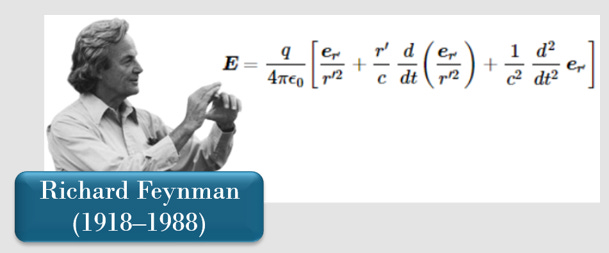
One example of this is the elegant Heaviside-Feynman equation for radiation from a relativistic charge executing arbitrary motion. Written down by Heaviside in 1904, the equation was completely ignored by a generation of physicists, only to be rediscovered by Richard Feynman in 1963 and showcased in the Feynman Lectures in 1963. It was not until the 1999 edition of Jackson’s classic text on electrodynamics that Heaviside was widely credited with the discovery. Similarly, in 1904, Heaviside established many of the properties of synchrotron radiation from orbiting charges. Motivated by recent speculation about atomic structure, Heaviside wanted to calculate the energy radiated from an orbiting electron, and in doing so he discovered the columnated radiation beam from an orbiting charge, correctly establishing the width and intensity of the radiation beam. The discovery of a columnated radiation beam is usually credited to physicists working in the 1940s, such as Julian Schwinger, and the many historical reviews of synchrotron radiation consistently fail to mention Heaviside.

In this talk, we focus on two more of Heaviside’s seminal discoveries in physics, Cherenkov radiation and gravitational waves. Both of these are now recognised by specialists as important discoveries, but neither are widely celebrated in the broader scientific community. In 1888, the year after Ernst Mach first published images of a Mach cone in supersonic flow, Heaviside sketched the radiation cone behind a charge moving through a dielectric at a speed exceeding the phase velocity of light. He returned to this topic several times, but it was not until 1900 that he finally managed to get a complete mathematical description of the shock cone, complete with singularities on the cone surface. His discoveries went unnoticed and, when the 1958 Nobel Prize in physics went to Cherenkov and colleagues for the discovery and theory of Cherenkov radiation, Heaviside was not mentioned once. Indeed, it was not until 1974 that Heaviside’s pre-emptive discovery of Cherenkov radiation was highlighted by Tom Kaiser, who wrote to Nature, complaining that Heaviside had been overlooked. It took another 10 years before one of the Nobel Prize winners finally conceded priority to Heaviside, in 1984.


Heaviside’s work on gravitational waves met with a similar fate. Keen to free Newtonian gravity from instantaneous action at a distance, Heaviside developed, in 1893, what is now known as the theory of gravito-magnetism. This is a theory of gravity that mimics Maxwell’s equations and has two gravitational fields, the conventional Newtonian field, which is associated with all mass and is the analogue of the electric field, and one associated with masses in motion, which is the analogue of the magnetic field. As with Cherenkov radiation, this work was overlooked by physicists, only to be rediscovered in 1969. Gravito-magnetism is now known to be a non-relativistic limit of general relativity. It plays a prominent role in astrophysics.
Peter Davidson to Keynote The Heaviside Symposium

The Heaviside Symposium is proud to announce that Cambridge Professor & Author of “The Scientific Legacy of Oliver Heaviside,” Peter Davidson will be a keynote speaker at The Heaviside Symposium in Huntsville, Alabama, January 17-18, 2027. His topic will be: “Heaviside’s Forgotten Physics: From Cherenkov Shock Cones to Gravito-Magnetism.”
How Antennas Receive: Visualizing Energy Flow with Poynting Streamlines
Junming Diao, Mississippi State
The presentation uses Poynting streamlines to visualize how electromagnetic energy flows around a receiving antenna and into its load. This approach gives effective aperture a physical shape, explains how small antennas capture energy from regions larger than their physical size, and provides insight into mutual coupling, array behavior, and near-field energy transport.
Revisiting Heaviside’s Energy Current: An E × H-Wave Interpretation of Electromagnetic Energy Transfer
Malcolm F. Davidson BSc MSc Hope Valley RI USA.
For more than a century, electromagnetic theory has been extraordinarily successful mathematically while its physical interpretation has remained the subject of continuing discussion. Building upon the pioneering insights of Oliver Heaviside and the later transmission-line work of Ivor Catt, this paper re-examines the physical interpretation of electrical energy transfer from an ExH-wave perspective.
Heaviside challenged the conventional causal narrative by stating “We reverse this,” proposing that the electromagnetic field should be viewed as producing the current rather than current producing the field. He referred to this as Energy Current. This paper develops that insight further by treating the propagating ExH wave as the primary physical entity, with electric current interpreted as the measurable consequence of the interaction between that wave and material boundaries.
Within this framework, several classical concepts—including conventional current, displacement current, capacitors, inductors, and electromagnetic energy propagation—are reconsidered from a transmission-line perspective. Maxwell introduced ∂D/∂t to preserve circuit continuity across the dielectric gap of a capacitor, where the conventional conduction-current model provided no physical path. This paper proposes that the resulting terminal current is instead the integral manifestation of interacting ExH energy propagations within the capacitor — ExH → nε ← ExH — and that displacement current is therefore a mathematical representation of this underlying wave process, not an independent physical current. Capacitors and inductors are consequently examined as constrained transmission-line structures supporting ExH propagation. The paper also examines the accepted foundational quantities , the speed of electromagnetic propagation; Zo, the characteristic impedance of free space; and the permeability and permittivity of the propagation medium.
Rather than questioning the mathematical validity of Maxwell’s equations, this paper asks whether modern measurement techniques and transmission-line theory support a more coherent physical interpretation of electromagnetic phenomena. The objective is to continue the direction suggested by Heaviside himself: placing energy flow, rather than charge flow, at the centre of electromagnetic theory.
The Return of the Heaviside Energy Current
Dr. David S Walton
In the 1970’s I was the director of a start-up company in the UK making and selling logic analysers. This required the assembly of significant quantities of Schottky TTL logic to build a high speed processor and display system. It came as a surprise to me that the the physics of interconnecting these logic gates was apparently unknown and not clearly understood.
As I was struggling to understand this I was making sales calls, and one day found myself at Marconi Avionics in Borehamwood where I met an engineer - Ivor Catt. In the lift on the way out of the building he gave me some of his background in Motorola in Phoenix where he had worked on ECL systems. We began a dialogue by telephone which resulted in new insights in electromagnetic theory. In parallel with my conversation, Ivor was also discussing these matters with a coworker in Marconi — Malcolm Davidson.
One of the initiatives to come from these discussions was a decision to hold a series of seminars to share our conclusions with other engineers. One of the presentations I gave at these events was an historical overview of the development of electronic communications. I explained that digital communication had originated with the telegraph in the nineteenth century where the physics of transmission was explained by Oliver Heaviside in terms of a transverse electromagnetic wave guided by the wire pair. Heaved had realised that the electrical energy, which he termed Energy Current, travelled in the space between the wires. This was pulse transmission which is qualitatively different from sinusoidal transmission.
However the invention of Radio led to electronics developing analogue techniques. The consequence of this analogue environment was that engineers brought these understandings to the design of interconnections in digital systems. This was a disaster and it was only as we rediscovered the Heaviside insights, such as the vital importance of the return path, that we could build reliable high speed systems.
In my paper I will go into more detail regarding these digital design insights
Is There Such a Thing as an Electric Current? The Work of Ivor Catt
Forrest Bishop
In 1892 Oliver Heaviside asked “By the way, is there such a thing as an electric current?” Heaviside was self-taught and worked outside the institutions of his day, yet he reshaped Maxwell into the theory we use today, and was then largely written out of it. Three-quarters of a century later an engineer arrived at the same question on his own. Ivor Catt, working on high-speed logic interconnection in 1967, measured crosstalk the conventional picture could not account for, and concluded in 1976 that electric current plays no part in lighting a lamp. Energy travels in the fields between the conductors, which only guide it. For a decade his work appeared in Wireless World, read by thousands of design engineers, though it stayed absent from the academic literature. Like Heaviside, he built a legacy and a following that ran well ahead of its recognition. Catt sorted electromagnetic theory into three main positions: electric current causes the fields, the fields cause the current (Heaviside), or the current does not even exist. He spent his life making the case for the third, an argument that has not been refuted.
On the Necessity and Sufficiency of Light-Speed Energy Current: A Critical Reformulation and a Proposed Discriminating Experiment,
Alex Yakovlev, Newcastle University, UK
A recurring claim in the “energy current” literature associated with Ivor Catt, David Walton, and Alex Yakovlev holds that electromagnetic energy (the Poynting vector, E × H) can *only* exist in motion, at the speed of light in the medium, and that this single postulate is both necessary and sufficient to explain transmission-line phenomena such as the Wakefield experiment — with further, more speculative claims that the same postulate extends to explain particle mass and the structure of the electron. This article does three things. First, it states the hypothesis (H) and the associated proposition (W ⟺ H) in precise, checkable form. Second, it re-examines the published “proof” of this equivalence and shows that its sufficiency direction is sound but uninformative (it is already contained in standard Maxwell–Heaviside transmission-line theory), while its necessity direction is valid only for a narrower claim than the one advertised — namely, that a memoryless, instantaneous field description is insufficient to predict Wakefield-type data, not that Catt’s stronger ontological claim (that conventional moving charge does not exist) is required. Third, it sets out a concrete experimental program capable of discriminating between the conventional and energy-current pictures where earlier discussions could not, using electron-drift measurements, Hall-effect carrier dependence, and relativistic transformation of the Poynting vector under a boost.
Dear Hans,
Congratulations on assembling such a compelling and rich program for the Heaviside Symposium. While I won't be able to participate, I wanted to commend the organization and wish you all every success with the event!
Warm regards,
Mario