

II 1.5.1 Conformity Versus Creativity
"...cyberspace means the end of our species."

The contrast between conformist Egypt and creative Greece is striking and demonstrates another fundamental principle: conformity is the enemy of creativity. In his novel, Lost World, Michael Crichton (1942–2008) vividly explains the dangers of conformity through the mouth of his character, Ian Malcolm.
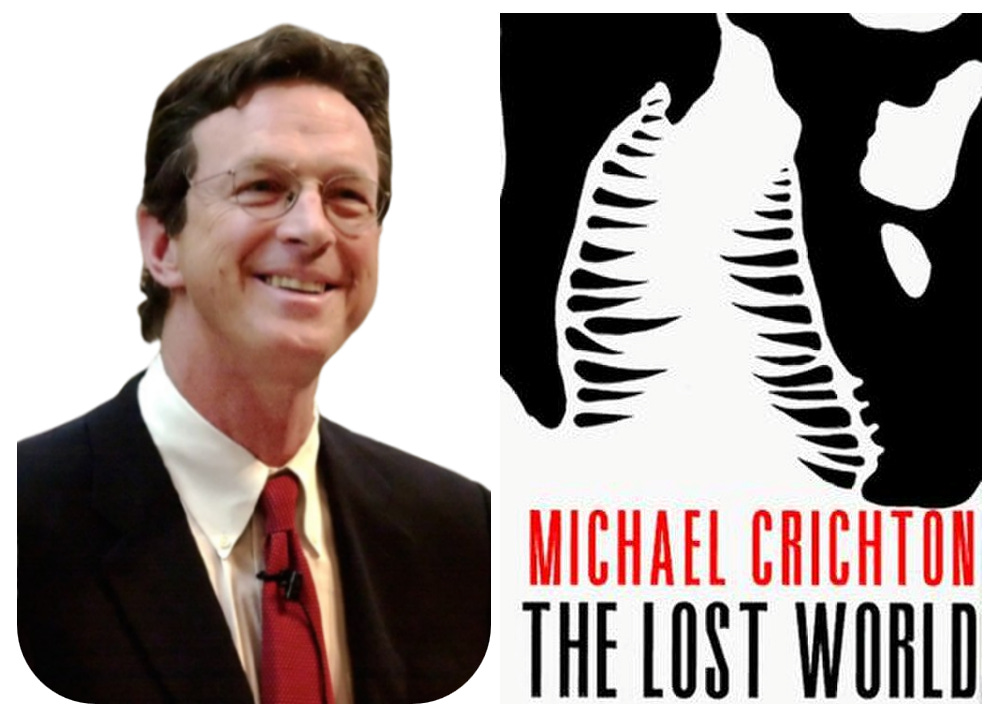
I think cyberspace means the end of our species... it means the end of innovation... This idea that the whole world is wired together is mass death. Every one knows that small groups in isolation evolve fastest. You put a thousand birds on an ocean island and they’ll evolve very fast. You put ten thousand on a big continent, and their evolution slows down.
Now, for our own species, evolution occurs mostly through our behavior. We innovate new behavior to adapt.
And everybody on earth knows that innovation only occurs in small groups. Put three people on a committee and they may get something done. Ten people, and it gets harder. Thirty people, and nothing happens. Thirty million, it becomes impossible.
That’s the effect of mass media — it keeps anything from happening. Mass media swamps diversity. It makes every place the same. Bangkok or Tokyo or London: there’s a McDonald’s on one corner, a Benneton on another, a Gap across the street. Regional differences vanish. All differences vanish.

In a mass-media world, there’s less of everything except the top ten books, records, movies, ideas. People worry about losing species diversity in the rain forest.
But what about intellectual diversity — our most necessary resource? That’s disappearing faster than trees. But we haven’t figured that out, so now we’re planning to put five billion people together in cyberspace. And it’ll freeze the entire species.
Everything will stop dead in its tracks.
Everyone will think the same thing at the same time.
Global uniformity [[iv]].
Physics once exhibited a diverse creativity almost Greek in character. English, French, German, Italian, Russian, and other physicists approached science with distinct, idiosyncratic, yet complementary ways. The English, for instance, could complain that foreigners lacked any picture, model, or mechanism of what was going on, while the French could complain that their brethren across La Manche (the English Channel) were turning the Temple of Reason into a factory with their models.
Even within England, “Oxford is on the Thames; Cambridge is on the River Cam” [[v]]. Roger Bacon (~1219–1292) made Oxford the cradle of experimental science. Traditionally however, Oxford emphasized inherited scholastic traditions centered on theology, philosophy, and the preservation of orthodox learning, whereas the newer Cambridge, founded in AD 1204, developed a comparatively stronger orientation toward mathematics and natural philosophy, showing greater openness to empirical and scientific inquiry. At present, the once-vibrant plurality of scientific and cultural traditions now faces extinction amid a bland global scientific uniformity.
There is yet another factor to consider: how the media through which people communicate and interact shapes their interactions.
That’s all for now. Remember always to keep calm, and make physics great again.
See you next week,
Hans
P.S. Pick up your copy of Fields & Energy Book I: Fundamentals and Origins of Electromagnetism, if you haven’t already:
Next time: II 1.5.2 Empire and Communication
Enjoyed the article, but maybe not quite enough to spring for a paid subscription?
Then click on the button below to buy me a coffee. Thanks!

Full Table of Contents [click here]
Follow Online:
You may follow me online in other places as well:
Telegram: 𝔸𝕖𝕥𝕙𝕖𝕣𝕔𝕫𝕒𝕣’𝕤 𝔸𝕖𝕥𝕙𝕖𝕣𝕤𝕥𝕣𝕖𝕒𝕞
Gab: @aetherczar
Twitter: @aetherczar
Amazon: Hans G. Schantz
References
[[i]] American author and speaker Michael Crichton (1942–2008) speaking at Harvard in 2002. See: https://en.wikipedia.org/wiki/Michael_Crichton#/media/File:MichaelCrichton_2.jpg

[[ii]] Crichton, Michael (1942–2008), The Lost World: A Novel (Jurassic Park), See: https://amzn.to/450tqFw
[[iii]] Ben Schumin, “View of Breezewood, Pennsylvania from the northwest end of the commercial strip. I-70 is visible in the foreground,” May 2, 2006. Cropped. See original at: https://upload.wikimedia.org/wikipedia/commons/d/d6/Breezewood%2C_Pennsylvania.jpg

[[iv]] Crichton, Michael (1942–2008) l, The Lost World: A Novel, New York: Knopf, 1995, pp. 311-312. Paragraph breaks added. See: https://amzn.to/450tqFw
[[v]] Steele, Remington, “Steele Crazy After All These Years,” Remington Steele, Season 1, Ep. 16, 1983. The Thames is called “Isis” within Oxford, but it’s still the Thames.
Having driven through Breezewood, PA on numerous occasions, it has a nightmarish, Interstate-Highway-plowing-through-the-middle-of-a-small-town feel that is all its own.
But, the look? Yeah. The look is so very similar to many other places.
My experience in Science, Regulation, and Administration jibes with Crichton's description. A handful of people on a problem beats an army. You find too many detractors and tangent makers with large groups, as well as those far too concerned with consensus before the problem is addressed.
More people limit your solution set. Some study long lost to me said that your optimum multidisciplinary group is somewhere between 7 and 11 people. More than that and your solution discovery capability drops precipitously. I suspect agreeing on the solution does as well.
Brilliant and prescient quote from Michael Crichton.