


In this episode Paul Hellier (of The Fair Food Forager and Friends Show) and I discuss Albert Einstein and the publicity campaign that made him a scientific superstar.
Think differently... The Fair Food Forager & Friends show is a guest / interview based show on health, history, environment, geopolitics, esoteric, taboo and sometimes mind blowing, informative chats with anyone questioning the accepted narrative. Things the mainstream just won’t talk about.
The auto-generate transcript has only been lightly edited, so the usual caveats apply.
Transcript
Hans: And his first wife wrote him begging him to do something about their son who was institutionalized with schizophrenia. He was in Switzerland, but of course at the time no one knew what would happen and the concern was That Switzerland might fall to the Nazis just like neighboring Austria had a few years earlier. And between being Jewish and being a mental patient, the Nazis did not take mental patient. to Work Camps. They just summarily executed them in many cases. So he would not have had a very good prospect if anything had happened in Switzerland. And as far as is known, Einstein never bothered writing back and certainly didn’t do anything about his own son who was institutionalized. So he had a very troubled family relationship throughout his life, despite his professional achievements, a lot of those aspects were hidden in letters and not generally made public.
Paul: Welcome to the Fair Food Forager and Friends Show, a podcast discussing health, science, environment, well-being, geopolitics and thought-provoking, sometimes esoteric, outside of the mundane ideas. We’ll hear from doctors who have removed themselves from Rockefeller Medicine, authors and researchers going above and beyond the mainstream narrative. Ideas that we should all feel free to at the very least contemplate. Come with me and broaden our knowledge. Here’s some alternate views and let’s make up our own minds.
Paul: Well hello and welcome to this week’s conversation with Hans Schantz after a week off and we’re back this time talking about Einstein and where physics has lost its way. Anyway, without further ado, let’s hear from Hans.
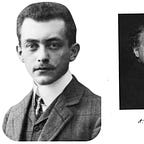
Hans: Going back to the 1920s and taking a look at the propaganda campaigns is very instructive because you can see how all of these things worked and how they played out and how people were easily manipulated. Things like when Einstein’s friend Max Born wrote a book on relativity. Born thought, you know, I’m going to put a picture of Albert Einstein facing the title page of the book. And his and Einstein’s mutual friend, a physicist named Max von Laue, was absolutely shocked at the effrontery of putting a picture of someone in a book. I mean, it was Shameless Self-Promotion. We couldn’t have that kind of thing. It’s disreputable. It’ll ruin your reputation and Einstein’s reputation. And Born pulled the picture.

Max Born (1882–1970), from ‘Voltiana,’ Como, Italy - September 10, 1927 issue, courtesy AIP Emilio Segrè Visual Archives, left, and frontispiece and title page of Born’s 1920 popular book on Einstein’s relativity theory, right.
5.2.7 A Scientific Superstar is Born

Einstein became a global celebrity following the formal joint session of the Royal Philosophical Society and the Royal Astronomical Society in London where Dyson and Eddington announced their eclipse results on November 6, 1919 [[i]], “the day on which Einstein was canonized,” in the words of his biographer, Abraham Pais (1918–2000) [
But meanwhile, in a lot of the Jewish press that was very friendly to Einstein in the wake of the discovery, the verification of general relativity through the 1919 eclipse of the sun, they were putting his picture on the cover of magazines and promoting him as the most brilliant thinker since Copernicus and Galileo and Newton, you know, step aside Newton, here comes Einstein.

And you can understand how a culture that had Max von Lowy’s attitude of recoiling from that shameless self-promotion. There’d be a lot of people reacting negatively and a lot of people influenced by that over-the-top promotion. I mean, we think nothing of that kind of thing today, but in the early years of propaganda, those techniques were really powerful and devastating and had enormous effect.
Paul: What is the saying? Something like, any publicity is good publicity? Yes, sorry. Absolutely. I’m agreeing. Einstein, he was part of the Zionist movement, was he?
Hans: He had an interesting relationship with the Zionist movement. On the one hand, they were quite happy to use his fame and publicity to promote their causes, but his Zionist friend Blumfeld [Blumenfeld], something like that, who had recruited Einstein, actually wrote to Weizmann saying, whatever you do, don’t let Einstein talk about Zionism because he had attitudes and ideas that were antithetical to the mainstream Zionist movement.

In fact, Einstein would probably be called an anti-Semite today for his attitudes. He was deeply in favor of a two-state solution, He thought that the Jews in Palestine needed to learn to live peacefully with their Arab neighbors. And in the wake of the 1948 Civil War Revolution that happened, Got Israel Its Independence. He was one of the co-signers of a letter to the New York Times denouncing the actions of a lot of the Israeli militias like Hergun, which in its political arm ended up being absorbed into the current Likud party of Benjamin Netanyahu. He called them fascists and Nazis in their technique. So his relationship with Zionism was definitely kind of mixed.
Despite all that, just a few years later, he was offered the position of first [actually second] president of Israel. It’s largely a ceremonial position, but I think it goes to show they were willing to accept a lot more dissent and criticism, particularly from a figure like Einstein, than is tolerated today.
Paul: Yeah, let’s talk a little bit about his life as well because he, from what I understand, he wasn’t really a super great person as far as relationships and things like that are concerned. You still see these images of him, you know, riding a bike or sticking his tongue out. So you kind of get this fun, loving, genius type of thought of him, even if you don’t know a lot about him. But his real life wasn’t quite like that, was it?
Hans: No, he had a remarkably troubled and turbulent life. He got his girlfriend, who eventually became his first wife, pregnant before they were married. And they had an illegitimate daughter who his first wife took back to her Her family.

And no one knows what became of that daughter, whether she died in infancy or whether she was given away in adoption. And it only came out in recent years as some of the early letters escaped from the family and people became aware of them. After they did marry, they had two sons, one of whom went on to be a rather distinguished professor of civil engineering, but their other son ended up developing schizophrenia.

Einstein carried on. He had affairs with his first cousin. In fact, when he and his first wife eventually divorced, originally Einstein wanted to marry, I guess he was Around 40 at this point, he wanted to marry the 18-year-old daughter of his first cousin. Of course, she was not terribly thrilled with that idea. He ended up marrying his first cousin instead. Throughout his life, he had a great many affairs with different women. And he was very indifferent to family obligations.
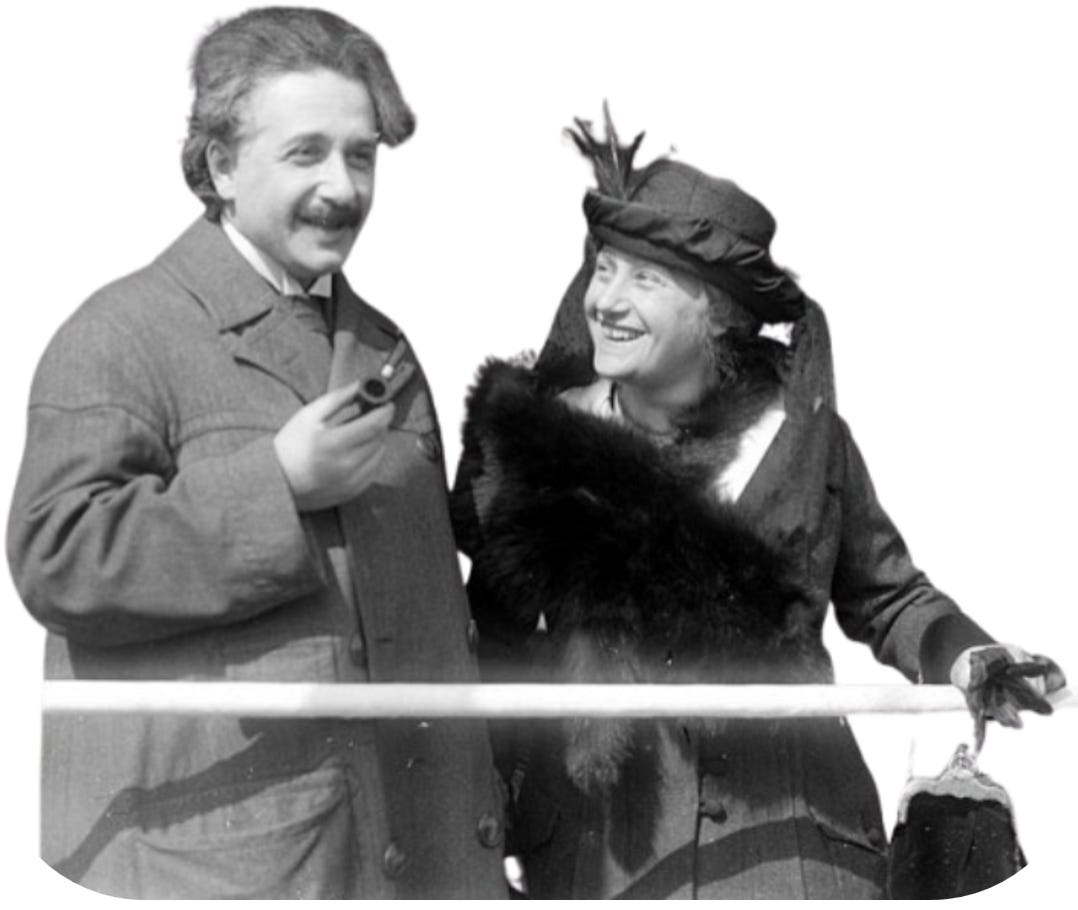
He was a friend with a Dutch-Jewish physicist, Paul Ehrenfest. who similarly had a son with Down Syndrome who was institutionalized and was unable to function in society. Einstein wrote to Ehrenfest a letter saying that valuable people like yourself should not waste their time on hopeless causes.

But Ehrenfest felt enormous guilt and was overwhelmed by the responsibilities of taking care of his disabled son. And ultimately, one day, he took his son to a park, pulled out a revolver, shot his son, and then shot himself, committing suicide. So, an absolutely tragic situation.
When Einstein was in Princeton just before World War II, he set up a little legal office providing letters of recommendation and trying to get Jewish scientists and other prominent Jews out of Nazi Germany. And his first wife wrote him begging him to do something about their son, who was institutionalized with schizophrenia. He was in Switzerland, but of course at the time no one knew what would happen and the concern was that Switzerland might fall to the Nazis just like neighboring Austria had a few years earlier. And between being Jewish and being a mental patient, the Nazis did not take mental patients to Work Camps. They just summarily executed them in many cases. So he would not have had a very good prospect if anything had happened in Switzerland. And as far as is known, Einstein never bothered writing back and certainly didn’t do anything about his own son who was institutionalized. So he had a very troubled family relationship throughout his life, despite his professional achievements, a lot of those aspects were hidden in letters and not generally made public. After Einstein’s death, his archives and all of his papers were kept at Princeton. He had deeded them in his will to the Hebrew University in Jerusalem.
There’s a fascinating story that a physicist named Freeman Dyson tells of finally in 1981 when the archives had all been cataloged and were ready to be shipped to Israel. One winter break, Dyson was just walking across the lonely, deserted campus on a dark and rainy night, and he saw a military truck pull up to the Institute for Advanced Physics at Princeton.

And according to his report, Israeli soldiers jumped off of the truck, and started carrying crates out of the building one by one loading up the truck. And then when they were done, they climbed on the truck and drove away. That was apparently a military operation to exfiltrate the Einstein files from Princeton, take them back to the Hebrew University in Jerusalem.
The legacy and likeness of Einstein has raised over $250 million in licensing fees, and it’s jealously guarded and relentlessly promoted in the media. That figure, like you said, of the genial, wise philosopher and scientist… definitely he had some clay feet.
Paul: If you asked somebody, can you name a scientist? He would probably be in the top three, at least. Yeah. Be number one. Do you think he’s worthy of that title?
Hans: He did some extraordinary scientific work. I mean, there are some issues about his early work where he refused to cite the people who influenced him. And that’s a major scientific faux pas. If someone influences you, if you’re getting ideas from someone, you’re obliged to cite them in your references so that people can see where your ideas came from.
5.2.1 Origins of Special Relativity

"Many of you will have looked up his [Einstein’s] paper… and you will have noticed some peculiarities. The striking point is that it contains not a single reference to previous literature. It gives you the impression of quite a new venture. But that is, of course, as I have tried to explain, not true."
He didn’t do that. And that created the impression that his work was perhaps more original than really it was. In relativity, he had been deeply influenced by a French physicist named Henri Poincaré.
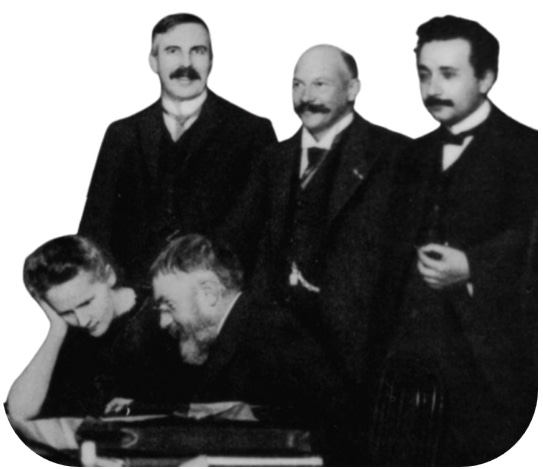
Poincaré had come up with the term principle of relativity. He came up with the notion that we had to have a new kind of mechanics with a maximum speed being the speed of light and some of the implications of it. The mathematical transforms that made up special relativity were largely done by a Dutch physicist named Lorentz. So Einstein was involved in a lot of that kind of work in writing his papers. But at the same time, he did do a lot of original work with lasting significance. I’ve already mentioned this conversation, his work on the atomic theory showing how Brownian motion was a evidence for atomic theory or on the photoelectric effect, how you have to have light of a particularly strong frequency in order to eject Electrons from Metal and how that is evidence of the quantum theory.
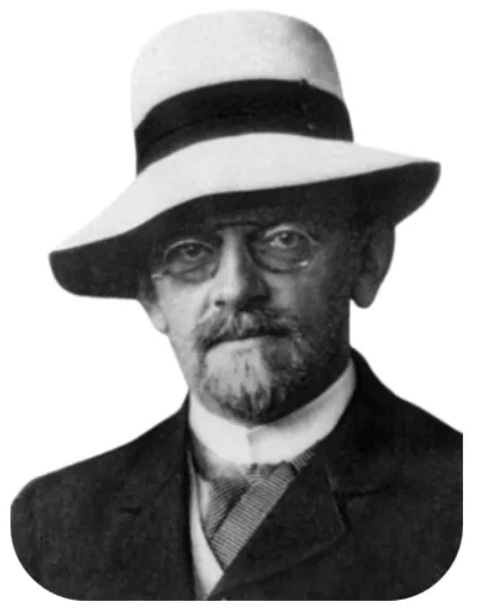
And general relativity is probably perhaps his greatest mathematical achievement. He was racing neck and neck with one of the most famous mathematicians of the early 20th century, a man named Hilbert, Hilbert commented, every schoolboy on the streets of Göttingen knows more about four-dimensional geometry than Einstein does.
5.2.5 Can Gravity Bend Light?

The notion that gravitation might bend light rays was not original to Einstein (as his detractors would soon point out). In his 1704 Opticks, Newton himself asked:
But he acknowledged, however, it was Einstein who got the theory done, not the mathematicians. So, with a lot of hand-holding and help from his mathematical friends, Einstein was able to pull that off and come up with a theory of general relativity that was ultimately proven to at least be consistent with observations, although there are a lot of people who today are raising questions about how gravity works and what the shortcomings of general relativity might be.
Really, for me, it’s fascinating to see how Einstein was really responsible for bringing the “observables” perspective into physics. He was strongly influenced by a physicist named Mach. who argued that we can’t ever know what reality really is. All we can know is what our observations, our measurements, what our senses tell us.
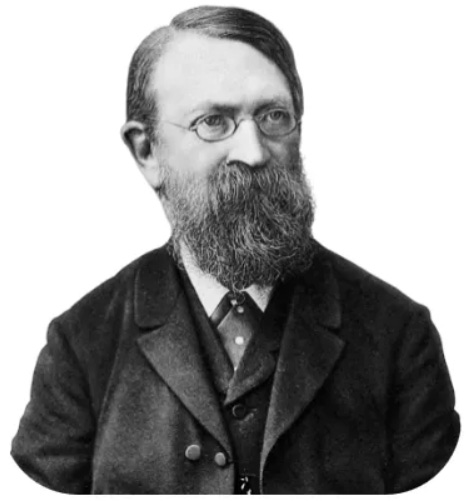
And that influenced Einstein to approach special relativity by looking at what does an observer see. An observer sees the speed of light being the same in all frames and the laws of physics are the same in all frames of reference. And those two premises Let him derive and reach all of the conclusions that people like Lorentz and Fitzgerald and Larmor and others had come up with about length contraction and time dilation and so forth.
But then when quantum mechanics came around, Einstein in developing special relativity, Einstein was convinced that he had done away with the ether, that we didn’t need to have a process or a mechanism. Everything was mathematically derived and we didn’t need to appeal to this substance or a process to give rise to how electromagnetism works.
But then when he came up with general relativity, general relativity is based on the idea that matter tells space-time how to curve and space-time tells matter how to move.

There’s a certain curvature associated with space in Einstein’s general relativity theory. And that sounds a lot like an ether. It sounds like space has this property of curvature throughout supposedly empty space. Einstein in 1920 gave a speech where he talked about how, in that sense, there was an ether to have to explain how general relativity worked. So he was backing away from his, you know, no electromagnetic ether absolutism of his special relativity discovery.
By 1925, Heisenberg was giving his first lectures on the new quantum theory. And according to Heisenberg in his memoirs that he wrote in 1970 or so, a good number of years after Einstein was already dead, According to Heisenberg, Einstein invited him back to Einstein’s apartment after one of his Berlin lectures. Einstein asked him, where are the electron trajectories in this new quantum theory of yours?
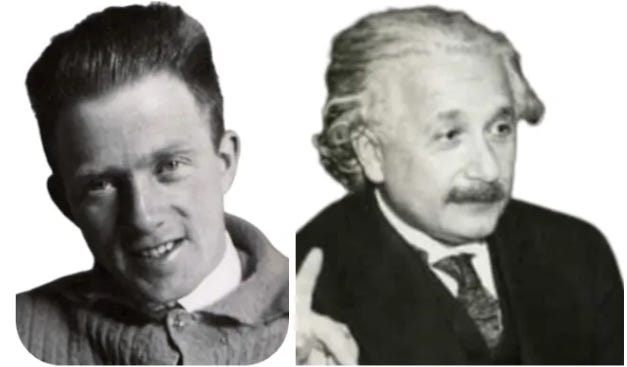
Heisenberg said, there are no trajectories. We’re focusing only on the observables.
Einstein replied, the electrons have to be somewhere doing something, don’t they?
And Heisenberg proceeded to quote Einstein back at Einstein on the importance of focusing just on the observables and on the measurements and not appealing to arbitrary mechanisms or processes or what physicists today would call hidden variables beneath the superficial quantum observables.
And Einstein took all that in and according to Heisenberg, he said, you know, I may have held those ideas and may have written them down, but they’re nonsense just the same.
5.2.9 Was Einstein Right About "Jewish Physics?"

Ideas some today might consider racist or antisemitic were pervasive among Weimar-era Germans. One very prominent German physicist declared:
And that was his break with the mainstream of quantum mechanics that Heisenberg and Bohr were pushing, an interpretation that came to be known as the Copenhagen interpretation, that we can only look at the measurements, we can’t delve deeper and understand the underlying processes that are taking place.
Einstein never accepted that. He argued, God does not play dice with the universe. Bohr supposedly countered, Einstein stopped telling God what to do. And finally, in 1935, Einstein collaborated with two other physicists, Podolsky and Rosen. to write a paper that has become Einstein’s most quoted paper. It’s called the EPR paper after the initials of the authors.
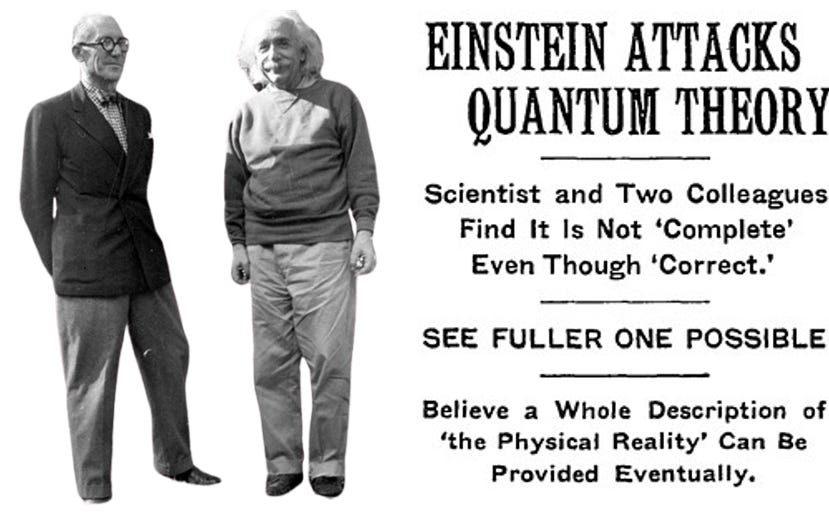
But what Einstein and his co-authors argued is that quantum mechanics was incomplete and that there had to be some kind of hidden variables behind the quantum observables that the Copenhagen interpretation crowd appealed to. And that to my mind points toward the solution to the problem and was a really critical step.
So in the conventional wisdom, Einstein did all this brilliant work, but then went off the rails in the 1920s and was unable to accept the deep and profound wisdom of the Copenhagen interpretation. I see it as more of a redemption arc. that Einstein introduced all of this observer-centric, instrumentalist, positivist perspective into physics and recoiled in horror when he realized what he had done and did his best to try to rectify matters at the end of his career. So my interpretation and the narrative spin I would put on Einstein’s career is a little different than what the conventional wisdom would be.
Paul: To explain it to someone who doesn’t understand physics, you have the observable and that things are reacting in many different ways and there’s some randomness or that everything can be explained by maths and equations.
Hans: They’re the two different trains of thought. What they would say is everything can be explained by maths and equations. But fundamentally, the math and equations is providing you a probabilistic perspective on what’s going on. There’s a certain probability that an excited electron will decay from an upper orbital to a ground state, and we don’t know exactly when it’s going to happen or where it is and what’s going on. So we can’t get beyond the basic observation of, well, what’s the frequency it emits and what’s the average time it spends before it decays and transitions to that lower ground state.
Interestingly, next week I’m headed off to a conference. I wrote a paper, Is Hydrogen an Electrically Small Antenna? And I’m going to be presenting it at a conference next week.
Is Hydrogen an Electrically Small Antenna?

Abstract—Atoms are unambiguously electrically small radiators and absorbers of electromagnetic radiation. This paper demonstrates that hydrogen’s radiative properties including frequency and bandwidth scale with orbital radius like those of an electrically small antenna. The quantum mechanical observables are not the end of the story. Instead, atomic tr…
What I found is, contrary to the strictest Copenhagen interpretation of hydrogen being a system that is characterized solely by the observables I’m finding that hydrogen obeys all of the relationships that antenna engineers use to study electrically small antennas. That the bandwidth of the signals that hydrogen emits... are consistent with the size of the orbital, the size of the antenna.
Is Hydrogen an Electrically Small Antenna?

According to Grok, "Overall, the paper is a provocative bridge between classical electromagnetism and quantum atomic physics. It suggests that at least the radiative behavior of the simplest atom carries an imprint of classical antenna physics, with the “hidden variables” of energy storage, power flow, and geometry doing the explanatory work that pure QM observables leave implicit. Whether this generalizes to other atoms, molecules, or the full quantum formalism remains an open question raised by the work."
So it looks as though there’s a commonality where, well, hydrogen atoms are obeying antenna physics, and therefore that suggests they share a common internal structure, that the observables that we measure on a quantum mechanical basis for hydrogen are masking the underlying hidden variables of things like stored energy and radiated power.
Paul: Before we went on air, Hans you were saying that you were trying to explain all of the history of physics and the people that are involved to a more general audience so that more people can, I guess, gather an interest and understand what has happened and where it’s going. So do you think that the nature of physics, if it had gone off track, is there any sort of recovery? Do you think people are now, it’s heading in a direction that you would be happy with?
Hans: Well, not yet, but I’m working on it. Give me time. I think that physics has... Reached a dead end. Progress has slowed down. Any number of commentators are noting that physics has not made much progress in the last few decades, that we seem to be in a cul-de-sac, that we need new ideas. I think what I have to offer is a fundamentally new idea and picture of how electromagnetism and quantum mechanics work.
Another thing that Feynman said, he was asked once, if there were some kind of cataclysm, how could you preserve the most amount of scientific knowledge in the fewest words?

And the words he chose were, everything’s made of atoms. Because if you understand that principle, a whole host of ideas about chemistry and how matter works become clear. Obviously, it’s a lot more complicated than that, but if you have that basic, simple, conceptual picture of matter, then you’ve unlocked and it’ll guide you through a lot of chemistry and chemical discoveries
I think “Fields Guide Energy” has the same kind of potential for understanding how electromagnetism works. And that once you realize that electromagnetism isn’t one thing, a photon combining two mutually contradictory properties of being a local particle and a non-local wave, and instead, electromagnetism is two things, the non-local wave, the fields, guiding the flow of energy that in the quantum limit looks like particles. If you approach it from that perspective, a lot of the paradoxes that have stumped people over the last century start to become a lot clearer.
What I’m trying to do is to introduce that kind of intuition as early as the high school level or undergraduates who are starting to understand physics and want to understand how electromagnetism behaves. and I’m trying to make it as simple and painless for them as possible with a wealth of historical and philosophic data so that you can really get the big picture of how science works, when it works well,
Paul: Fields & Energy, your book. So if you had... Fields were uniform, if it was just one uniform field across... then energy would be very easily predicted, wouldn’t it? Because there would be no interruption. It would just move at the same rate or whatever. Sorry if I’m sounding a bit slow here. But then as we spoke about in the beginning, if you have all these interruptions and changes in energy and fields and light, then it’s much harder to predict and that’s sort of what you’re talking about now that you need to take all that into account as well.
Hans: Well, it’s remarkably difficult to predict complicated problems. We can do very simple problems, an antenna in free space, and what will the fields look like? But when you start to throw that antenna in a building with walls and doors and windows and furniture and all kinds of reflective items and studs in the walls and wires and plumbing in the walls and so forth.
It very, very quickly gets too complicated for you to model in any particular precise detail. So what people have to do is develop heuristics, you know, general guidelines for how fields will propagate through buildings at particular frequencies. You can construct an elaborate model, but most of the You don’t necessarily have the time to do that. You want to know where to put the Wi-Fi node to get the best coverage. It would take a very long time to survey the building.
So even though we have a very deep and profound knowledge of electromagnetism and how to apply it in a whole variety of practical problems, there’s still a lot of heuristics, a lot of things that you gather through experience and that one wireless engineer shares with another.
One thing that really shocked me: I started off in physics and tried to be an antenna engineer with my physics PhD and had a lot of difficulty because ultimately physics diverged from electrical engineering about the time of World War II. It was kind of interesting to go back and look at the Advanced Electromagnetism Text, Electromagnetic Theory by Julius Adam Stratton in 1941 or so. And that’s the book that the engineers at the MIT Rad Lab and the physicists at the Manhattan Project and at Los Alamos, that’s the book they all use to understand electromagnetism. And you can take a look at it, and that book has a nice selection of applied practical electromagnetic phenomenon descriptions in it. It talks about electromagnetic propagation over the ground and through the ionosphere. It talks about waveguides and coaxes and antennas and arrays and so forth. A nice survey of practical electromagnetic engineering.
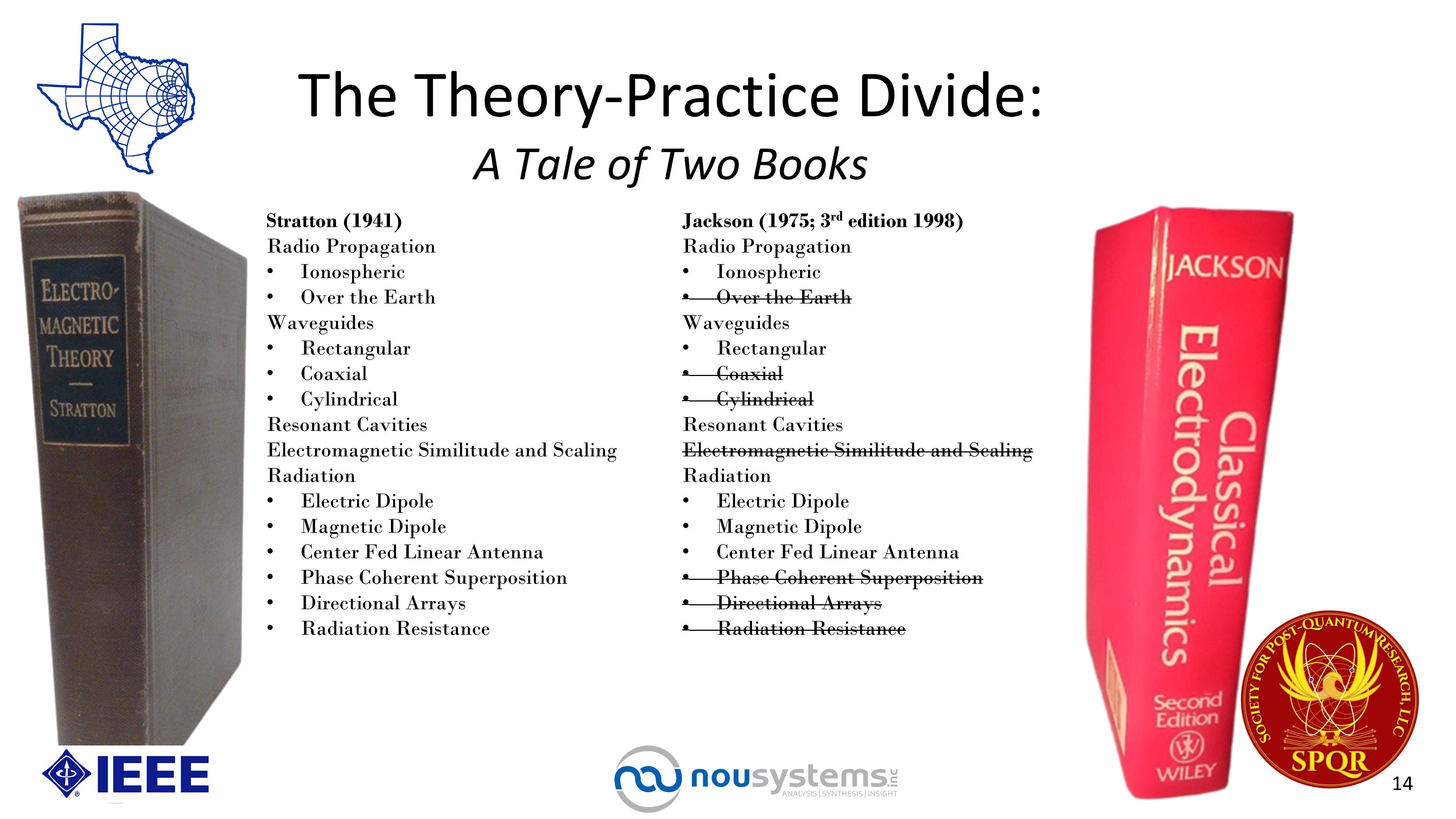
You can fast forward 50 years to when I took electromagnetism in physics graduate school from a book called Jackson Classical Electrodynamics. And if you look at the table of contents, Jackson has about half of those applied topics that were in Stratton. And that really made my jaw drop when I realized the implication of that. Today’s physicists are less well informed about practical applied electromagnetism than their predecessors of 80 years ago.
And what’s more, since World War II, those electrical engineers who’ve been ignored by the physics community, they’ve been making all kinds of progress and advances in understanding antennas and how they work. We have link laws to describe our RF links and understand what kind of antenna with what gain we need to close a link with what kind of received power. There are theories about how electrically small antennas behave and how big an antenna has to be to be an efficient absorber or radiator of energy. Concepts like impedance, which are really just covered in passing if at all in the physics curriculum, but are critical to understand the scattering and reflection and transmission of electromagnetic waves.
So, physics has become disconnected from the practical, applied, everyday phenomena that physicists need to understand if they’re going to understand electromagnetism. So, really, physicists need to read my book, I guess is the bottom line that I’m communicating here, because there is a big disconnect, and I’m doing my best to try to bridge that gap and try to bring physics and electrical engineering back into harmony with each other.
Paul: Yeah, well, that’s something fascinating because when you said that physics has hit a cul-de-sac and it’s not going anywhere, I would expect over time that early on you would have lots of discoveries and it would be easier to come up with new theories and progress. And then as you Go through time, that bottleneck would get more and more narrow. It’d be harder to discover new things. But if then it’s backwards from there, then that’s a little bit concerning.
Hans: It’s certainly the case that when you have a new theory, it can take a lot of time to work out what are the practical implementations or implications of that theory. And then it takes a few generations of very hard work, experimental and theoretical work, to explore all those implications, to explore all the ways the theory can be applied, and then you start ending up with a bunch of really tricky problems that the theory just isn’t working really well to solve. Even though it looks like it’s complete, it looks like you’ve got your theory of everything, there are a few little nitpicky details where you can tell that you’ve got a problem.
And it’s fascinating to go back and take a look at Lord Kelvin, William Thompson, who was a physicist, a mathematician, and an electrical engineer. And he, in early 1900s, maybe 1902, I’m not sure of the year, he gave some lectures in Baltimore where he summarized the state of the art in physics and basically said, well, we have figured everything out. We’ve got our mechanics, we’ve got our electromagnetism, we’ve got thermodynamics, we’ve got everything covered. There are just two little tiny problems that we need to try to figure out, and then we’ll be all done. One of them was the perihelion advance of Mercury, which ended up being one of the things that was answered by Einstein’s theory of general relativity. And the other, I forget, I think it was Planck’s black body radiation law, which ended up being quantum mechanics. So even then, when it looked like physics was complete, those little tiny problems of this curious spectral behavior of black body radiation and this curious little tiny perturbation in Mercury’s orbit, People were aware of them, and those were among the clues that led to the next deeper understanding of physics.
Today, we have any number of clues like that. One of my friends, Mike McCulloch, has come up with a theory he calls quantized inertia, where he’s looking at the rotation of galaxies and arguing that there is a certain minimum acceleration and that that’s why galaxies are rotating a bit faster than you would think, just based on looking at all the stars that are in the galaxy.
Quantised Inertia: From Anomalies to New Physics

“Something weird is going on at the fringes of known space.”
That would make a good introduction to a science fiction thriller, but Mike McCulloch’s Quantised Accelerations: From Anomalies to New Physics is science fact, not fiction.
In the conventional wisdom, that problem was solved, and I’m using air quotes for the benefit of the people listening on the podcast, that problem was solved by appealing to something called dark matter, which we’ve had no evidence for and have not been able to pin down in several decades now of looking. So I think that’s one important clue to future physics.
In physics, the premier theory of electromagnetism is something called quantum electrodynamics, which involves a very complex and non-converging power series that is said through extremely elaborate calculations so complex very few people can even double-check them. It is said to predict the anomalous magnetic moment of an electron. But the problem is when you take that same theory and apply it to a very similar problem, the anomalous magnetic moment of the electron’s slightly larger, heavier cousin, the muon, it doesn’t line up. So it’s clear there’s something not quite right with that theory as well.
In electromagnetism, for over a century, there’s been a problem called the problem of radiation reaction. And the idea there is, if you assume that you can think of electromagnetism as being all just point photons, you wiggle a charge, it accelerates, and out pops a photon from that charge. The problem with that is there has to be a reaction force, and if you study how that works, what you discover is the reaction force from radiating a photon makes the charge accelerate more, which should make it radiate more, which should make it accelerate more. And before you know it, you’ve got a runaway acceleration of a charge, and the Basically, the whole world would explode in a vast kaboom of plasma if that theory were correct.

Well, in my interpretation of electromagnetism, I think the single charge radiating model makes no more sense than the sound of a single hand clapping. You know, that’s that Zen koan. You’re supposed to contemplate the sound of a single hand. Of course, the point there is you can’t. You can’t have clapping or applause unless you’ve got a second hand working together with the first hand. It’s the same thing with charges. You can’t have radiation unless you have at least two charges working together to give rise to that radiation.
4.6.2 The Accelerating Charge Model

What is the sound of one hand clapping? The question is nonsense because applause requires two hands. Then why is our physical conception of radiation centered on the similarly nonsensical concept of one charge accelerating? Read on!
The accelerating charge actually absorbs energy. It’s moving faster. It’s getting more kinetic energy. It’s developing more magnetic field energy because it’s an increasing current And the energy that radiates away is energy that was involved in whatever field or charge distribution was doing the acceleration. So it’s a very simple conceptual answer to what’s been a very challenging problem that’s stumped with a lot of people for over a century now, that problem of radiation reaction.
So a lot of those little problems are floating around our modern-day physics, and I think we’re right to see some significant changes as we start to embrace new theories that can explain some of those problems.
Paul: Your challenge of bringing this to the fore and getting this all back on track, Hans: are you concerned about the modern attention span? We talked about the cell phone and the five-second videos. I know that’s obviously not across the board. There are still people out there who are born geniuses, but do you think that something needs to change for us to, again, progress all of the sciences?
Hans: Well, I think it’s very tough with all the demands on everyone’s attention to get people to sit down and spend an hour and a half for longer listening to a deep conversation like the one that we’re having. I’ve considered trying to modify my pitch and maybe do short form videos. I may yet do that with a clever little idea and a brief couple minute discussion of some of the Points that Make Up My Theory. But really, they’d just be like teasers or advertisements to try to get people to dig into the longer form content, the posts on my Substack and ultimately the book.
There is a really brilliant Canadian political theorist and historian named Harold Innes, who described, one of his students was Marshall McLuhan, who famously said, the medium is the message. But his teacher, Innes, was focused on describing media as being either time-based or space-based. What he meant by that is you have time-based media that are lasting and durable, stone tablets, architecture, things like that that have a certain permanence and last a long time.
II 1.5.2 Empire and Communications

In 1950, Harold Adams Innis (1894–1952) argued in Empire and Communications that the properties of dominant media shape civilizations, biasing them toward either time or space [[i]].
Today, our time-based media are things like books. But there’s also space-based media that’s more ephemeral, that doesn’t last. Things like jotting down a note and handing it to a messenger to convey to your soldiers out in the field. or things like that. Well, the whole internet is a vast space-based media that gives you very rapid control over a large area, but it lacks the kind of lasting permanence and relevance. It leaves our culture and our society out of balance, chasing the dopamine hit of the 30-second video instead of stepping back and focusing and paying attention to the deep foundations in time of a lot of the ideas with which we’re wrestling today.
Paul: I don’t think you’re alone in trying to find a solution to this because so many guests say the same thing. And I suppose you Everyone’s different and something will click with somebody and they’ll look deeper. They’ll go to another video or an hour and a half podcast, read a book, and then 99% of people will just brush over it if you’re lucky. So yeah, whatever the topic, it seems that everyone’s having the same issue where they’re trying to bring people along and it’s not easy.
Hans: Well, I think one thing that makes it easier is there really is a nice community I see forming of people who are connecting via word of mouth. Things like, you know, you had Robert Frederick on and I’d talked with him before and that got us connected. There are a lot of independent groups with intellectuals and thinkers who are promoting useful ideas that are outside of the mainstream, that aren’t the usual propaganda that you get in the usual media sources. And I think there are a lot of people who are hungry for that kind of information. And I really appreciate, in particular, what you’re doing with your Fair Food Forager Podcast project and making that information available to people.
Paul: I know one thing that I love about this podcast is a lot of the topics that we talk about, as you said, there are a growing amount of people who are hungry for more information rather than the approved narrative. And across all the topics that have been covered on this podcast, for example, there’s a lot of crossover and there’s disagreement. But we’re able to have the crossover and disagree on aspects and still get on with things. And I think that’s how it should be. That’s where we’ve probably lost our way, where we, as we talked about with the scientism, we don’t have to just follow away because that’s approved. We can... and disagree and still get along. And that’s really the basis of being alive, isn’t it? We can discuss things and not hate each other, but not agreeing on absolutely everything.
Hans: Absolutely. You have to be willing to change your perspective in light of new information and not just bitterly cling to old ideas for sentimental reasons or because that’s what everyone else thinks and people won’t like you if you adopt the other set of ideas. I faced that in my work in physics because The perspective I have, it’s pretty simple and straightforward, but it does fly in the face of a lot of physical understanding and a lot of physicists who think that we should all just shut up and calculate. We’ve got the math. We can calculate all of these situations, whether it’s antennas or subatomic particles, and trying to come up with a story or a narrative or a physical picture of it, that’s a complete waste of time and it is beneath their dignity to even consider that.
I watched one podcast where some friends were interviewing a famous astrophysicist, and they were talking about the narrative he was advancing for the story of the universe, and he got upset that the Big Bang inflationary cosmology theory was being called a narrative, like it was merely a story instead of absolute mathematical truth.
But the truth is, it really is a story. Science is a story that we tell ourselves about nature and about how it works. And the mathematics should be a servant helping us do that, not a master to be obeyed.
Paul: Yeah, absolutely. Hans: I’ve had to drop or question or even find a balance between both sides of so many things that I believed 10 years ago. So I think everyone needs to have that flexibility and yeah, I think you’re doing a great job at making something that many of us, including myself, as I said, I did a physics subject at university and I don’t remember much of it, but you’re making it interesting again. And I think that, yeah, you’re doing a great job there. If people do want to get into this, where can they get your books? Where’s the best place to look at your work and follow you?
Hans: Well, my first book, Fields & Energy, Book one, Fundamentals and Origins of Electromagnetism, you can find that on Amazon.
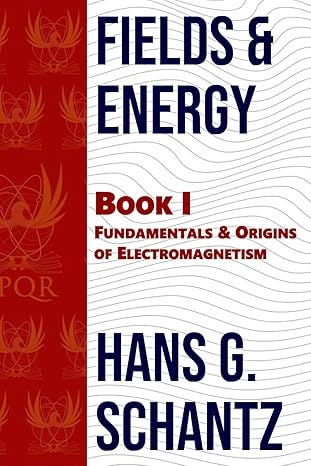
So it’s available pretty much worldwide from your local Amazon site. Most of the content of, well, all of Book 1 and most of what will be Book 2 are available on my Substack.

Again, that’s aetherczar.substack.com, A-E-T-H-E-R-C-Z-A-R. I try to put out substantial posts at least every week. I’m serializing the last, it turns out to be the first chapter of book two, because the whole project got so big, I had to take what was going to be two books and split it into three. So I’m having to do a little bit of introductory material and some summaries and so forth to finish off what will be book two. But most of that content, including everything we talked about, about Einstein and a lot of the history of modern physics, that’s all already available on my Substack if people want to go there and learn more.
Paul: Thanks for your time and thanks for persisting with somebody trying to get their head around this. And I think we covered, we brushed over a lot of topics and yeah, perhaps we can come back at some point and drill down on something a little bit more if I can keep up.
Hans: Sure, I’d be delighted to come back anytime and I appreciate the opportunity to speak with you and with your audience.
Paul: Yeah, well, thanks a lot. And I’ll supply links to everything that you mentioned in the show notes so people can find your work.
Hans: Well, thanks again.
Paul: Well thank you for listening to this week’s conversation with Hans Schantz. Hans: You can find his work on Substack under Aether Czar and I’ll supply links to that in the show notes and also on X at Aether Czar as well. Another fascinating conversation. I hope to get him back on the show where we’ll dive a little bit deeper and hopefully I can keep up. But isn’t it interesting? Some more scientism, some more pushing of scientists. Even if they do do good work, they are promoted for some reason. Some of them and some are just left to be forgotten by history. Anyway, until next time, stay well. Don’t forget to download the Fair Food Forager app. It’s here to help you find local, organic, waste-free food done best by family businesses who need our support as they are doing their best to survive the world of the corporatocracy.
Support your local businesses, share recipes, help in the food growing revolution and let’s get out into nature and enjoy it. Thanks again to Ash Grumald.
This song is Think Tank from the album Give Signs.
Think Tank Over
by the fainting Well,
I’m feeling the way tomorrow
And I give up Wishing
I didn’t understand
While the front line of victims
perpetrate an evil plan
And it’s so cold
Leaving us in their tracks
And it’s so evil
It’s taking ground
and I won’t get it back
Run over by the tank tank
By the Think Tank
That’s all for now. Remember always to keep calm, and make physics great again.
See you next week,
Hans
P.S. Pick up your copy of Fields & Energy Book I: Fundamentals and Origins of Electromagnetism, if you haven’t already:
Enjoyed the post, but maybe not quite enough to spring for a paid subscription?
Then click on the button below to buy me a coffee. Thanks!

Follow Online:
You may follow me online in other places as well:
Telegram: 𝔸𝕖𝕥𝕙𝕖𝕣𝕔𝕫𝕒𝕣’𝕤 𝔸𝕖𝕥𝕙𝕖𝕣𝕤𝕥𝕣𝕖𝕒𝕞
Gab: @aetherczar
Twitter: @aetherczar
Amazon: Hans G. Schantz


